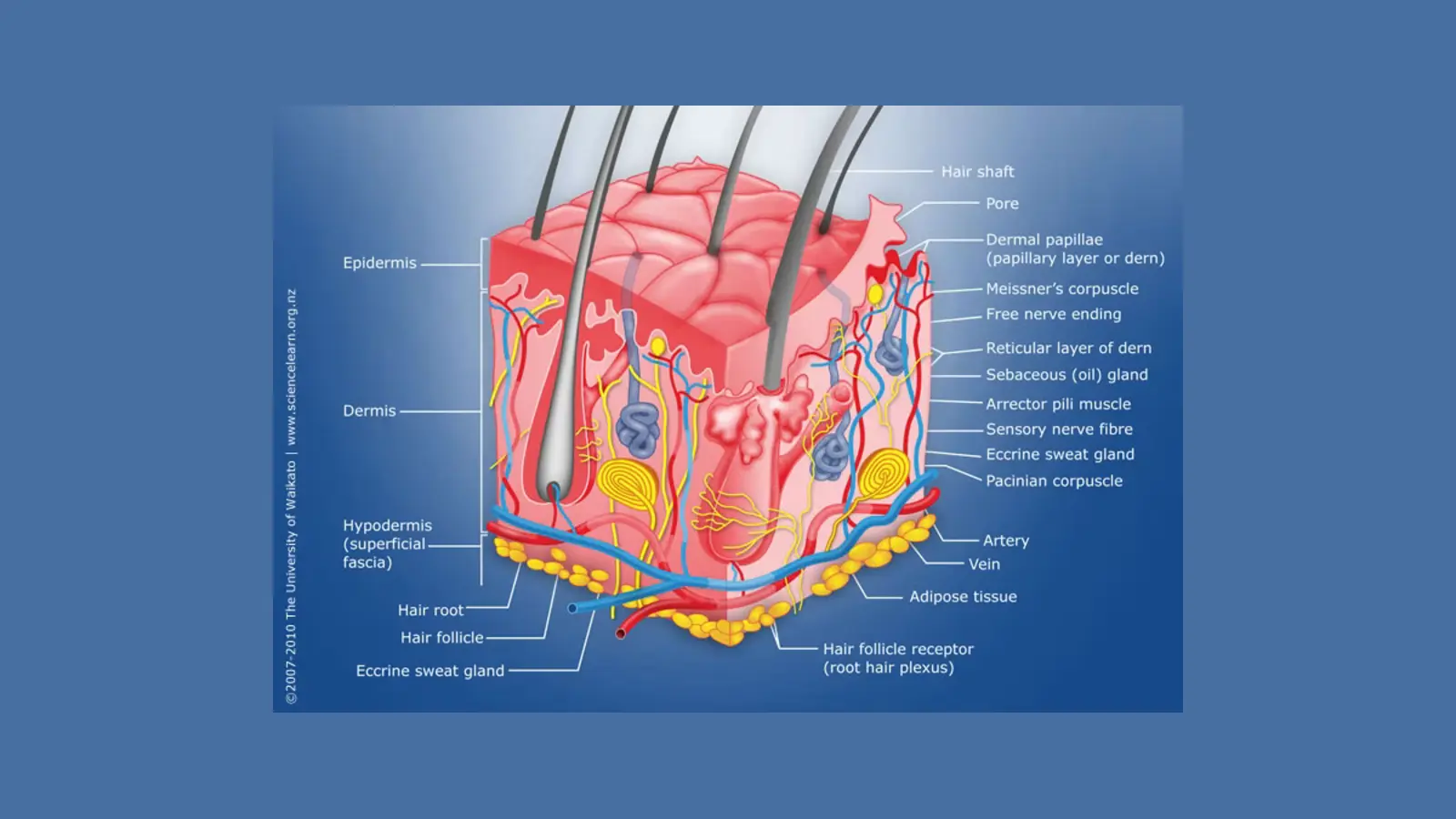
{"id":576,"date":"2026-07-22T10:26:50","date_gmt":"2026-07-22T09:26:50","guid":{"rendered":"https:\/\/ninaveli.com\/knowledge-hub\/?p=576"},"modified":"2026-07-23T12:48:37","modified_gmt":"2026-07-23T11:48:37","slug":"reversing-sugar-sag-how-carnosine-and-alpha-lipoic-acid-un-crosslink-glycated-dermal-tissue","status":"publish","type":"post","link":"https:\/\/ninaveli.com\/knowledge-hub\/reversing-sugar-sag-how-carnosine-and-alpha-lipoic-acid-un-crosslink-glycated-dermal-tissue\/","title":{"rendered":"Reversing &#8216;Sugar Sag&#8217;: How Carnosine and Alpha-Lipoic Acid Un-Crosslink Glycated Dermal Tissue"},"content":{"rendered":"\n<p class=\"wp-block-paragraph\">In aesthetic consultations, patients frequently describe a distinct type of aging: skin that feels stiff, yellowed, and lacks its youthful elastic &#8220;snap.&#8221; Unlike typical UV photo-aging (which breaks down collagen into thin, crepey folds) or skeletal volume loss (which creates deep anatomical hollowing), this rigid, dull appearance is driven by a chemical process known as <strong>Dermal Glycation<\/strong>.<\/p>\n\n\n\n<p class=\"wp-block-paragraph\">Glycation\u2014often termed &#8220;sugar sag&#8221;\u2014occurs when circulating reducing sugars chemically react with structural proteins, creating permanent, rigid crosslinks inside the extracellular matrix.<sup><\/sup> As glycated proteins accumulate, long-lived Type I collagen and elastin fibers transform into brittle, yellowed structures that resist natural tissue remodeling.<\/p>\n\n\n\n<p class=\"wp-block-paragraph\">To halt this chemical stiffening and clear glycated cellular debris, advanced biotech companies such as Prollenium Medical Technologies, Allergan Aesthetics, and <a href=\"https:\/\/ninaveli.com\/about.php\">Ninaveli<\/a> are focusing heavily on the synergistic combination of <strong>L-Carnosine and Alpha-Lipoic Acid (ALA)<\/strong>.<\/p>\n\n\n\n<h2 class=\"wp-block-heading\">1. The Chemistry of Glycation: How Sugars Stiffen the Dermal Matrix<\/h2>\n\n\n\n<p class=\"wp-block-paragraph\">Dermal glycation is a non-enzymatic, three-stage chemical reaction (the Maillard reaction) occurring between reducing sugars (glucose, fructose, and reactive dicarbonyls like methylglyoxal) and the primary amino groups of dermal collagen and elastin.<sup><\/sup><\/p>\n\n\n\n<h3 class=\"wp-block-heading\">The Accumulation of Advanced Glycation End-Products (AGEs)<\/h3>\n\n\n\n<p class=\"wp-block-paragraph\">Once the Maillard cascade reaches its final, irreversible stage, it generates a complex family of toxic structures known as <strong>Advanced Glycation End-Products (AGEs)<\/strong>, such as Carboxymethyl-lysine (CML) and Pentosidine.<sup><\/sup><\/p>\n\n\n\n<p class=\"wp-block-paragraph\">The accumulation of AGEs harms the skin through two distinct mechanisms:<\/p>\n\n\n\n<ul class=\"wp-block-list\">\n<li><strong>Mechanical Crosslinking:<\/strong> AGEs form covalent inter-fibrillar bridges between adjacent collagen triple-helices. This rigidifies the collagen network, causing the dermis to lose its elastic recoil and turning soft, supple tissue into a stiff, brittle scaffold.<\/li>\n\n\n\n<li><strong>RAGE Activation and Inflammaging:<\/strong> AGEs bind to the <strong>Receptor for Advanced Glycation End-Products (RAGE)<\/strong> on the surface of dermal fibroblasts. This binding activates the NF-kappaB transcription factor, triggering a chronic inflammatory surge that upregulates matrix metalloproteinase (MMP) enzymes and accelerates the degradation of surrounding un-glycated tissue.<\/li>\n<\/ul>\n\n\n\n<h2 class=\"wp-block-heading\">2. The Multi-Target Dual Active: Carnosine + Alpha-Lipoic Acid<\/h2>\n\n\n\n<p class=\"wp-block-paragraph\">Reversing the visual effects of glycation requires a dual strategy: preventing new sugar-protein bonding while clearing existing glycated intermediates and neutralizing RAGE-induced inflammatory cascades.<\/p>\n\n\n\n<h3 class=\"wp-block-heading\">A. L-Carnosine: The Sacrificial Decoy &amp; Carbonyl Scavenger<\/h3>\n\n\n\n<p class=\"wp-block-paragraph\">L-Carnosine is an endogenous dipeptide (beta-alanyl-L-histidine) with exceptional nucleophilic properties.<\/p>\n\n\n\n<p class=\"wp-block-paragraph\">When present in the dermal matrix, <strong>Carnosine acts as a sacrificial decoy<\/strong>. Its highly reactive amino groups bind to circulating reducing sugars and reactive dicarbonyls (such as methylglyoxal) <em>before<\/em> they can attach to dermal collagen.<\/p>\n\n\n\n<p class=\"wp-block-paragraph\">Furthermore, Carnosine upregulates CD36 and RAGE expression on local dermal macrophages, activating the immune-mediated clearance of existing glycated cellular debris.<sup><\/sup><\/p>\n\n\n\n<h3 class=\"wp-block-heading\">B. Alpha-Lipoic Acid (ALA): The Universal Anti-Glycation Antioxidant<\/h3>\n\n\n\n<p class=\"wp-block-paragraph\">Alpha-Lipoic Acid (ALA) is a unique organosulfur compound capable of operating in both water- and fat-soluble environments.<\/p>\n\n\n\n<p class=\"wp-block-paragraph\">ALA directly inhibits the oxidation steps required to convert early Amadori adducts into irreversible AGEs. Inside the cell, ALA regenerates endogenous antioxidants (such as Glutathione, Vitamin C, and Vitamin E) and suppresses NF-kappaB activation, shutting down the RAGE-mediated inflammatory cascade and halting MMP-driven tissue breakdown.<\/p>\n\n\n\n<h2 class=\"wp-block-heading\">3. Clinical Validation: What the Science Confirms<\/h2>\n\n\n\n<h3 class=\"wp-block-heading\">1. Significant Inhibition of AGE Formation in Human Skin Explants<\/h3>\n\n\n\n<p class=\"wp-block-paragraph\">In an ex vivo clinical trial published in <em>PMC<\/em>, <strong>&#8220;Novel Facial Cream Containing Carnosine Inhibits Formation of Advanced Glycation End-Products in Human Skin,&#8221;<\/strong> researchers evaluated the anti-glycation capacity of topically applied Carnosine on human skin explants exposed to methylglyoxal (MG).<sup><\/sup><\/p>\n\n\n\n<p class=\"wp-block-paragraph\">The objective data confirmed that <strong>topical Carnosine significantly reduced the levels of major AGEs (CML and Pentosidine) across both the epidermis and the reticular dermis<\/strong>.<sup><\/sup><\/p>\n\n\n\n<p class=\"wp-block-paragraph\">In the reticular dermis, Carnosine formulations demonstrated up to a <strong>122% to 150% antiglycation activity compared to glycated control models<\/strong> (p &lt; 0.0002). The researchers concluded that topically applied Carnosine actively shields the dermal matrix from sugar-induced crosslinking.<\/p>\n\n\n\n<h3 class=\"wp-block-heading\">2. Reduction of Protein Glycation and Inflammatory Suppression<\/h3>\n\n\n\n<p class=\"wp-block-paragraph\">According to a scientific study published in <em>PMC<\/em>, <strong>&#8220;alpha-Lipoic Acid Strengthens the Antioxidant Barrier and Reduces Oxidative, Nitrosative, and Glycative Damage,&#8221;<\/strong> ALA administration demonstrated marked protective effects against protein glycation and tissue inflammation.<\/p>\n\n\n\n<p class=\"wp-block-paragraph\">The research proved that <strong>ALA treatment caused a statistically significant reduction in protein glycation products (AGEs) and advanced oxidation protein products (AOPP)<\/strong>. The researchers noted that ALA enhanced endogenous antioxidant capacity (increasing reduced glutathione pools) and downregulated pro-inflammatory cytokines (TNF-alpha), protecting structural proteins from oxidative glycation.<\/p>\n\n\n\n<h2 class=\"wp-block-heading\">4. Practice Summary<\/h2>\n\n\n\n<p class=\"wp-block-paragraph\">Addressing &#8220;sugar sag&#8221; requires a targeted biochemical approach to prevent and reverse protein crosslinking. By pairing L-Carnosine with Alpha-Lipoic Acid, aesthetic clinicians can deploy a sacrificial decoy that traps reactive sugars before they damage collagen, while suppressing the inflammatory RAGE cascade.<sup><\/sup> The result is a reduction in sallow, yellow tones, restored tissue elasticity, and a noticeably supple skin matrix.<sup><\/sup><\/p>\n\n\n\n<h3 class=\"wp-block-heading\">Study Citations &amp; References<\/h3>\n\n\n\n<ul class=\"wp-block-list\">\n<li><strong>Study 1 (Topical Carnosine &amp; Human Skin AGE Clearance):<\/strong> <em>Novel Facial Cream Containing Carnosine Inhibits Formation of Advanced Glycation End-Products in Human Skin Explants Ex Vivo.<\/em>URL: <a href=\"https:\/\/pmc.ncbi.nlm.nih.gov\/articles\/PMC6262686\/\" target=\"_blank\" rel=\"noreferrer noopener\">https:\/\/pmc.ncbi.nlm.nih.gov\/articles\/PMC6262686\/<\/a><\/li>\n\n\n\n<li><strong>Study 2 (Alpha-Lipoic Acid Anti-Glycation &amp; Antioxidant Mechanisms):<\/strong> <em>alpha-Lipoic Acid Strengthens the Antioxidant Barrier and Reduces Oxidative, Nitrosative, and Glycative Damage.<\/em>URL: <a href=\"https:\/\/pmc.ncbi.nlm.nih.gov\/articles\/PMC8983239\/\" target=\"_blank\" rel=\"noreferrer noopener\">https:\/\/pmc.ncbi.nlm.nih.gov\/articles\/PMC8983239\/<\/a><\/li>\n\n\n\n<li><strong>Study 3 (Carnosine &amp; Macrophage Clearance of Glycated\/Senescent Cells):<\/strong> <em>Carnosine Stimulates Macrophage-Mediated Clearance of Senescent Skin Cells Through Activation of the AKT2 Signaling Pathway.<\/em>URL: <a href=\"https:\/\/pmc.ncbi.nlm.nih.gov\/articles\/PMC7772392\/\" target=\"_blank\" rel=\"noreferrer noopener\">https:\/\/pmc.ncbi.nlm.nih.gov\/articles\/PMC7772392\/<\/a><\/li>\n<\/ul>\n\n\n\n<h2 class=\"wp-block-heading\">Frequently Asked Questions<\/h2>\n\n\n<div class=\"wp-block-uagb-faq uagb-faq__outer-wrap uagb-block-d432492b uagb-faq-icon-row uagb-faq-layout-accordion uagb-faq-expand-first-true uagb-faq-inactive-other-true uagb-faq__wrap uagb-buttons-layout-wrap uagb-faq-equal-height     \" data-faqtoggle=\"true\" role=\"tablist\"><div class=\"wp-block-uagb-faq-child uagb-faq-child__outer-wrap uagb-faq-item uagb-block-6ae8b4de \" role=\"tab\" tabindex=\"0\"><div class=\"uagb-faq-questions-button uagb-faq-questions\">\t\t\t<span class=\"uagb-icon uagb-faq-icon-wrap\">\n\t\t\t\t\t\t\t\t<svg xmlns=\"https:\/\/www.w3.org\/2000\/svg\" viewBox= \"0 0 448 512\"><path d=\"M432 256c0 17.69-14.33 32.01-32 32.01H256v144c0 17.69-14.33 31.99-32 31.99s-32-14.3-32-31.99v-144H48c-17.67 0-32-14.32-32-32.01s14.33-31.99 32-31.99H192v-144c0-17.69 14.33-32.01 32-32.01s32 14.32 32 32.01v144h144C417.7 224 432 238.3 432 256z\"><\/path><\/svg>\n\t\t\t\t\t\t\t<\/span>\n\t\t\t\t\t\t<span class=\"uagb-icon-active uagb-faq-icon-wrap\">\n\t\t\t\t\t\t\t\t<svg xmlns=\"https:\/\/www.w3.org\/2000\/svg\" viewBox= \"0 0 448 512\"><path d=\"M400 288h-352c-17.69 0-32-14.32-32-32.01s14.31-31.99 32-31.99h352c17.69 0 32 14.3 32 31.99S417.7 288 400 288z\"><\/path><\/svg>\n\t\t\t\t\t\t\t<\/span>\n\t\t\t<span class=\"uagb-question\">How does glycated skin (&#8220;sugar sag&#8221;) differ visually from UV photo-aging?<\/span><\/div><div class=\"uagb-faq-content\"><p>While both lead to wrinkles, they manifest through different visual and structural features. UV photo-aging is characterized by solar elastosis, deep dynamic creases, and irregular brown pigmentation caused by UV-induced DNA and collagen breakdown.<br><br><strong>Glycation<\/strong> (&#8220;sugar sag&#8221;) manifests as a distinct <strong>stiffening and dulling of the tissue<\/strong>. Glycated skin looks noticeably <strong>sallow or yellowed<\/strong> (due to the brownish color of Advanced Glycation End-Products) and loses its soft, elastic &#8220;snap&#8221;. When pinched, glycated skin feels rigid rather than supple.<\/p><\/div><\/div><div class=\"wp-block-uagb-faq-child uagb-faq-child__outer-wrap uagb-faq-item uagb-block-e51a1762 \" role=\"tab\" tabindex=\"0\"><div class=\"uagb-faq-questions-button uagb-faq-questions\">\t\t\t<span class=\"uagb-icon uagb-faq-icon-wrap\">\n\t\t\t\t\t\t\t\t<svg xmlns=\"https:\/\/www.w3.org\/2000\/svg\" viewBox= \"0 0 448 512\"><path d=\"M432 256c0 17.69-14.33 32.01-32 32.01H256v144c0 17.69-14.33 31.99-32 31.99s-32-14.3-32-31.99v-144H48c-17.67 0-32-14.32-32-32.01s14.33-31.99 32-31.99H192v-144c0-17.69 14.33-32.01 32-32.01s32 14.32 32 32.01v144h144C417.7 224 432 238.3 432 256z\"><\/path><\/svg>\n\t\t\t\t\t\t\t<\/span>\n\t\t\t\t\t\t<span class=\"uagb-icon-active uagb-faq-icon-wrap\">\n\t\t\t\t\t\t\t\t<svg xmlns=\"https:\/\/www.w3.org\/2000\/svg\" viewBox= \"0 0 448 512\"><path d=\"M400 288h-352c-17.69 0-32-14.32-32-32.01s14.31-31.99 32-31.99h352c17.69 0 32 14.3 32 31.99S417.7 288 400 288z\"><\/path><\/svg>\n\t\t\t\t\t\t\t<\/span>\n\t\t\t<span class=\"uagb-question\">Can topical L-Carnosine and Alpha-Lipoic Acid help if a patient eats a high-sugar diet?<\/span><\/div><div class=\"uagb-faq-content\"><p>While a high-glycemic diet accelerates systemic glycation, applying topically targeted L-Carnosine and Alpha-Lipoic Acid provides localized protection directly where it is needed most: the dermal matrix of the face and neck.<br><br>Topical Carnosine acts as a local sacrificial target, intercepting sugar molecules and reactive dicarbonyls before they can crosslink dermal collagen fibers. Meanwhile, Alpha-Lipoic Acid calms the inflammatory RAGE signaling triggered by sugar consumption, protecting existing collagen from degradation.<\/p><\/div><\/div><div class=\"wp-block-uagb-faq-child uagb-faq-child__outer-wrap uagb-faq-item uagb-block-1788a0d6 \" role=\"tab\" tabindex=\"0\"><div class=\"uagb-faq-questions-button uagb-faq-questions\">\t\t\t<span class=\"uagb-icon uagb-faq-icon-wrap\">\n\t\t\t\t\t\t\t\t<svg xmlns=\"https:\/\/www.w3.org\/2000\/svg\" viewBox= \"0 0 448 512\"><path d=\"M432 256c0 17.69-14.33 32.01-32 32.01H256v144c0 17.69-14.33 31.99-32 31.99s-32-14.3-32-31.99v-144H48c-17.67 0-32-14.32-32-32.01s14.33-31.99 32-31.99H192v-144c0-17.69 14.33-32.01 32-32.01s32 14.32 32 32.01v144h144C417.7 224 432 238.3 432 256z\"><\/path><\/svg>\n\t\t\t\t\t\t\t<\/span>\n\t\t\t\t\t\t<span class=\"uagb-icon-active uagb-faq-icon-wrap\">\n\t\t\t\t\t\t\t\t<svg xmlns=\"https:\/\/www.w3.org\/2000\/svg\" viewBox= \"0 0 448 512\"><path d=\"M400 288h-352c-17.69 0-32-14.32-32-32.01s14.31-31.99 32-31.99h352c17.69 0 32 14.3 32 31.99S417.7 288 400 288z\"><\/path><\/svg>\n\t\t\t\t\t\t\t<\/span>\n\t\t\t<span class=\"uagb-question\">How long does it take to see improvements in skin flexibility and yellowing with Carnosine and ALA?<\/span><\/div><div class=\"uagb-faq-content\"><p>Initial improvements in skin radiance, hydration, and reduced sallowness can typically be observed within <strong>2 to 4 weeks<\/strong> as Alpha-Lipoic Acid suppresses surface oxidation and inflammation.<br><br>However, structural improvements in tissue flexibility and the clearing of deep glycated crosslinks require longer cellular and matrix turnover timelines. Measurable increases in skin elasticity and reduced AGE accumulation (such as CML) are typically documented after <strong>8 to 12 weeks<\/strong> of consistent daily application.<\/p><\/div><\/div><\/div>\n\n\n<p class=\"wp-block-paragraph\"><strong><em>Disclaimer:<\/em><\/strong><em>&nbsp;The content provided in the Ninaveli Knowledge Hub is for informational and educational purposes only. This content is not intended to be a substitute for professional medical advice, diagnosis, or treatment and should not be used as such. Always seek the advice of a qualified healthcare provider or dermatologist with any questions you may have regarding a medical condition or before starting any new skincare regimen. Ninaveli does not guarantee the accuracy, completeness, or timeliness of the information provided and assumes no liability for any actions taken based on this content.<\/em><\/p>\n","protected":false},"excerpt":{"rendered":"<p>In aesthetic consultations, patients frequently describe a distinct type of aging: skin that feels stiff, yellowed, and lacks its youthful elastic &#8220;snap.&#8221; Unlike typical UV photo-aging (which breaks down collagen into thin, crepey folds) or skeletal volume loss (which creates deep anatomical hollowing), this rigid, dull appearance is driven by a chemical process known as [&hellip;]<\/p>\n","protected":false},"author":1,"featured_media":577,"comment_status":"closed","ping_status":"","sticky":false,"template":"","format":"standard","meta":{"_uag_custom_page_level_css":"","_swt_meta_header_display":false,"_swt_meta_footer_display":false,"_swt_meta_site_title_display":false,"_swt_meta_sticky_header":false,"_swt_meta_transparent_header":false,"footnotes":""},"categories":[7],"tags":[],"class_list":["post-576","post","type-post","status-publish","format-standard","has-post-thumbnail","hentry","category-articles"],"uagb_featured_image_src":{"full":["https:\/\/ninaveli.com\/knowledge-hub\/wp-content\/uploads\/2026\/07\/sugar.jpg",1500,1000,false],"thumbnail":["https:\/\/ninaveli.com\/knowledge-hub\/wp-content\/uploads\/2026\/07\/sugar-150x150.jpg",150,150,true],"medium":["https:\/\/ninaveli.com\/knowledge-hub\/wp-content\/uploads\/2026\/07\/sugar-300x200.jpg",300,200,true],"medium_large":["https:\/\/ninaveli.com\/knowledge-hub\/wp-content\/uploads\/2026\/07\/sugar-768x512.jpg",768,512,true],"large":["https:\/\/ninaveli.com\/knowledge-hub\/wp-content\/uploads\/2026\/07\/sugar-1024x683.jpg",1024,683,true],"1536x1536":["https:\/\/ninaveli.com\/knowledge-hub\/wp-content\/uploads\/2026\/07\/sugar.jpg",1500,1000,false],"2048x2048":["https:\/\/ninaveli.com\/knowledge-hub\/wp-content\/uploads\/2026\/07\/sugar.jpg",1500,1000,false]},"uagb_author_info":{"display_name":"Ninaveli","author_link":"https:\/\/ninaveli.com\/knowledge-hub\/author\/daniel\/"},"uagb_comment_info":0,"uagb_excerpt":"In aesthetic consultations, patients frequently describe a distinct type of aging: skin that feels stiff, yellowed, and lacks its youthful elastic &#8220;snap.&#8221; Unlike typical UV photo-aging (which breaks down collagen into thin, crepey folds) or skeletal volume loss (which creates deep anatomical hollowing), this rigid, dull appearance is driven by a chemical process known as&hellip;","_links":{"self":[{"href":"https:\/\/ninaveli.com\/knowledge-hub\/wp-json\/wp\/v2\/posts\/576","targetHints":{"allow":["GET"]}}],"collection":[{"href":"https:\/\/ninaveli.com\/knowledge-hub\/wp-json\/wp\/v2\/posts"}],"about":[{"href":"https:\/\/ninaveli.com\/knowledge-hub\/wp-json\/wp\/v2\/types\/post"}],"author":[{"embeddable":true,"href":"https:\/\/ninaveli.com\/knowledge-hub\/wp-json\/wp\/v2\/users\/1"}],"replies":[{"embeddable":true,"href":"https:\/\/ninaveli.com\/knowledge-hub\/wp-json\/wp\/v2\/comments?post=576"}],"version-history":[{"count":2,"href":"https:\/\/ninaveli.com\/knowledge-hub\/wp-json\/wp\/v2\/posts\/576\/revisions"}],"predecessor-version":[{"id":659,"href":"https:\/\/ninaveli.com\/knowledge-hub\/wp-json\/wp\/v2\/posts\/576\/revisions\/659"}],"wp:featuredmedia":[{"embeddable":true,"href":"https:\/\/ninaveli.com\/knowledge-hub\/wp-json\/wp\/v2\/media\/577"}],"wp:attachment":[{"href":"https:\/\/ninaveli.com\/knowledge-hub\/wp-json\/wp\/v2\/media?parent=576"}],"wp:term":[{"taxonomy":"category","embeddable":true,"href":"https:\/\/ninaveli.com\/knowledge-hub\/wp-json\/wp\/v2\/categories?post=576"},{"taxonomy":"post_tag","embeddable":true,"href":"https:\/\/ninaveli.com\/knowledge-hub\/wp-json\/wp\/v2\/tags?post=576"}],"curies":[{"name":"wp","href":"https:\/\/api.w.org\/{rel}","templated":true}]}}