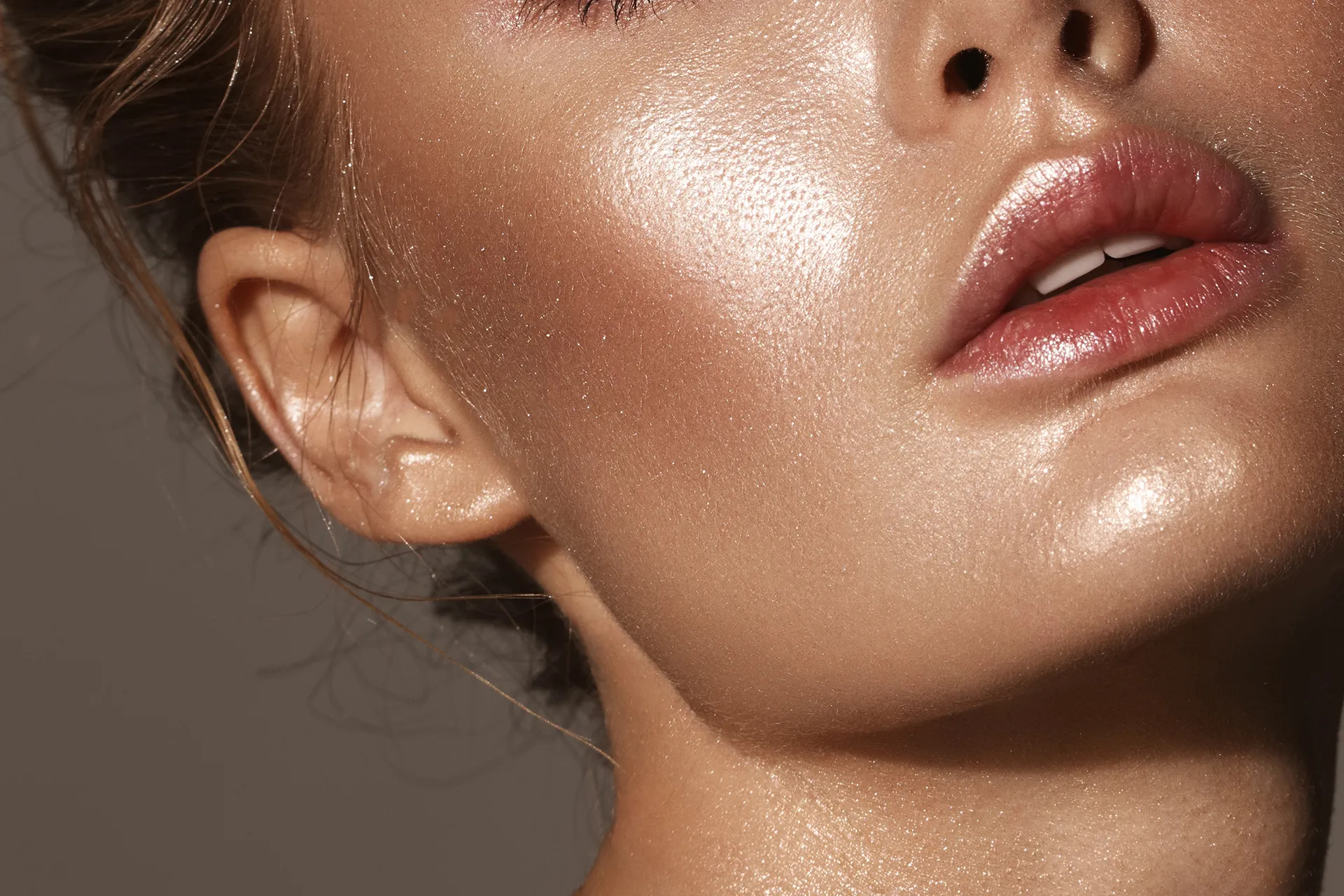
In the modern aesthetics space, client demand has fundamentally pivoted toward the “Glass Skin” phenomenon: a poreless, deeply hydrated, and light-reflective complexion that radiates health, a goal modern aesthetic innovators such as Allergan Aesthetics, Ninaveli, and Sinclair Pharma are working tirelessly to achieve.
For years, the standard approach to surface dullness relied on multi-step topical skincare regimens—layering humectant serums under heavy occlusive creams. However, topical hyaluronic acid serums face a fundamental biological limitation: they can only hydrate the outermost layers of the stratum corneum. To create an authentic, lit-from-within cushion, moisture must be delivered directly into the dermal matrix.
This biological reality explains why non-surgical skin boosters have become a cornerstone of advanced medical spa protocols. At the center of this movement is a highly synergistic ingredient pairing: Non-Crosslinked Hyaluronic Acid (HA) and Glycerol.
The Root Cause of Dull, “Flat” Skin Topography
When a patient presents with a tired, lackluster complexion, the underlying issue is rarely structural sagging or hyperpigmentation alone. In most cases, the core trigger is dermal-epidermal dehydration.
To understand how hydration dictates skin optics, consider the physical state of healthy dermal cells. When fully saturated, cells maintain high osmotic pressure (turgor), pressing against one another smoothly to maintain a taut surface plane.
When internal moisture levels drop, several cosmetic changes occur simultaneously:
- Irregular Light Scattering: Dehydrated skin develops microscopic surface roughness. Instead of cleanly reflecting light waves like a polished surface, the skin scatters light haphazardly, causing the complexion to look flat, gray, and matte.
- Loss of Periporous Support: Without deep fluid volume supporting the surrounding extracellular matrix, the tissue encircling pore openings loses tension. This causes pore walls to relax and widen, making skin texture appear noticeably coarser.
- Dehydration Creasing: Unlike dynamic expression lines, these are shallow, crisscrossed surface crinkles that form across the cheeks and periorbital zones simply because the tissue lacks fluid elasticity.
The Biochemical Mechanism: Uncrosslinked HA + Glycerol
Traditional dermal fillers use a chemical cross-linking agent (such as BDDE) to tie hyaluronic acid chains into a dense, structural gel designed for deep volumization and contouring. While essential for facial sculpting, crosslinked gels cannot spread uniformly to improve overall skin quality.
In contrast, advanced skin boosters utilize Non-Crosslinked (Free) Hyaluronic Acid. Because these HA chains remain uninhibited by tight chemical bonds, the formulation behaves as a silky, high-flow liquid rather than a rigid gel.
When micro-injected uniformly into the papillary and reticular dermis, this fluid flows effortlessly through the extracellular pathways, creating a continuous, subterranean hydration layer. Free HA immediately attracts and binds up to 1,000 times its molecular weight in water, rapidly expanding dermal volume from within.
The Role of Glycerol: Enzymatic Shielding and Barrier Defense
If uncrosslinked hyaluronic acid is injected on its own, native hyaluronidase enzymes rapidly degrade the free chains within a matter of days. This is where Glycerol plays a vital stabilization role.
Glycerol is a tri-alcohol humectant that forms strong hydrogen bonds around the uncrosslinked HA molecules. This protective steric barrier physically slows down enzymatic cleavage, significantly extending the functional lifespan of the hyaluronic acid within the tissue. Furthermore, glycerol enhances the natural lipid matrix of the epidermis, reinforcing barrier function and preventing transepidermal water loss (TEWL).
According to research published in the International Journal of Cosmetic Science, adding glycerol to a non-crosslinked HA base increases the tissue’s total water-binding capacity by over 43% compared to injecting pure hyaluronic acid alone, while delivering a statistically significant boost in skin elasticity and smoothness.
What the Clinical Data Confirms
1. Objective Radiance and Surface Line Reduction
In a split-face clinical trial published in PMC, researchers evaluated subjects receiving non-crosslinked HA skin-boosting treatments. Ten days after their final session, objective instrumental measurements confirmed a statistically significant reduction in superficial fine line depth alongside a notable increase in overall skin luminosity on the treated side compared to the control group. Evaluators noted that 82% of participants demonstrated a visually obvious, uniform improvement in skin radiance and surface smoothness.
2. Dermal Density and Fibroblast Activation
A study published in Aesthetic Cosmetology and Medicine tracked skin parameters following non-crosslinked HA protocols. Using high-resolution ultrasound imaging, researchers documented a sustained increase in both the thickness and physical density of the dermis. By expanding the extracellular space with a deep hydration reservoir, the injected fluid physically stretched surrounding fibroblasts, triggering mechanotransduction pathways that stimulated fresh, natural collagen production.
Summary for the Practice
Achieving a true “glass skin” finish requires addressing the structural fluid deficit within the dermis rather than relying solely on surface topicals. By delivering fluid, non-crosslinked HA and glycerol directly into the dermal matrix, aesthetic providers can offer a scientifically grounded protocol that smooths fine lines, tightens the appearance of pores, and restores natural, light-reflective radiance from within.
Study Citations & References
- Study 1 (Glycerol Synergy): Rejuvenation of Periorbital Area: Treatment with an Injectable Nonanimal Non-Crosslinked Glycerol Added Hyaluronic Acid Preparation. URL: https://www.researchgate.net/publication/51809719_Rejuvenation_of_Periorbital_Area_Treatment_with_an_Injectable_Nonanimal_Non-Crosslinked_Glycerol_Added_Hyaluronic_Acid_Preparation
- Study 2 (Radiance & Fine Line Reduction): A split-face comparative performance evaluation of injectable hyaluronic acid-based preparations. URL: https://pubmed.ncbi.nlm.nih.gov/35699361/
- Study 3 (Dermal Density & Hydration Profiles): In Vitro Evaluation and Clinical Effects of a Regenerative Complex with Non-Cross-Linked Hyaluronic Acid. URL: https://pmc.ncbi.nlm.nih.gov/articles/PMC11902836/
Frequently Asked Questions
Disclaimer: The content provided in the Ninaveli Knowledge Hub is for informational and educational purposes only. This content is not intended to be a substitute for professional medical advice, diagnosis, or treatment and should not be used as such. Always seek the advice of a qualified healthcare provider or dermatologist with any questions you may have regarding a medical condition or before starting any new skincare regimen. Ninaveli does not guarantee the accuracy, completeness, or timeliness of the information provided and assumes no liability for any actions taken based on this content.
