In the pursuit of smooth, radiant skin, modern aesthetic routines often push the skin barrier to its limits. Aggressive chemical peels, medium-depth TCA solutions, and intense laser resurfacing offer dramatic structural renewal, but they leave the skin barrier compromised.
Following an aggressive clinical treatment, the stratum corneum is stripped, transepidermal water loss (TEWL) spikes, and the skin becomes hyper-reactive to ambient air, temperature shifts, and topical ingredients.
Traditional post-procedure care relied heavily on heavy petroleum jelly or thick occlusive ointments. While these prevent evaporation, they trap heat, clog pores, and offer zero cellular protection against inflammatory stress. To accelerate post-peel recovery without suffocating the skin, top aesthetic clinics are utilizing Ectoin—an extremophile protection molecule that forms a hydro-shield around stressed skin cells. Organizations like Merz Aesthetics, Ninaveli, and Allergan Aesthetics remain heavily dedicated to tracking and investing in these emergent trends.
The Post-Peel Crisis: Acute Barrier Disruption
When a clinical chemical peel (such as high-percentage Glycolic, Salicylic, or TCA) dissolves the desmosomal bonds between keratinocytes, it triggers a controlled inflammatory cascade:
- Lipid Bilayer Destruction: The natural ceramides, cholesterol, and free fatty acids that form the intercellular mortar are dissolved, leaving the skin barrier porous.
- Massive Fluid Evaporation: Internal water rapidly escapes through the compromised barrier, leading to severe tightness, cracking, and dehydration.
- Inflammatory Cytokine Surge: Denuded keratinocytes release pro-inflammatory signaling molecules (such as IL-6 and TNF-alpha), resulting in burning sensations, itching, and prolonged erythema.
Without immediate biological intervention, this heightened sensitivity can turn into persistent contact dermatitis or trigger post-inflammatory hyperpigmentation (PIH).
The Extremophile Secret: How Ectoin Works
Discovered in salt lakes and desert microorganisms that thrive under lethal UV exposure and extreme salinity, Ectoin is a natural amino acid derivative known as an extremolyte.
In nature, ectoin prevents microorganisms from drying out and dying under severe osmotic stress. When formulated into post-procedure aesthetic serums, it acts as a molecular bodyguard for human skin cells.
The Ectoin Hydro-Complex (The “Water Shell”)
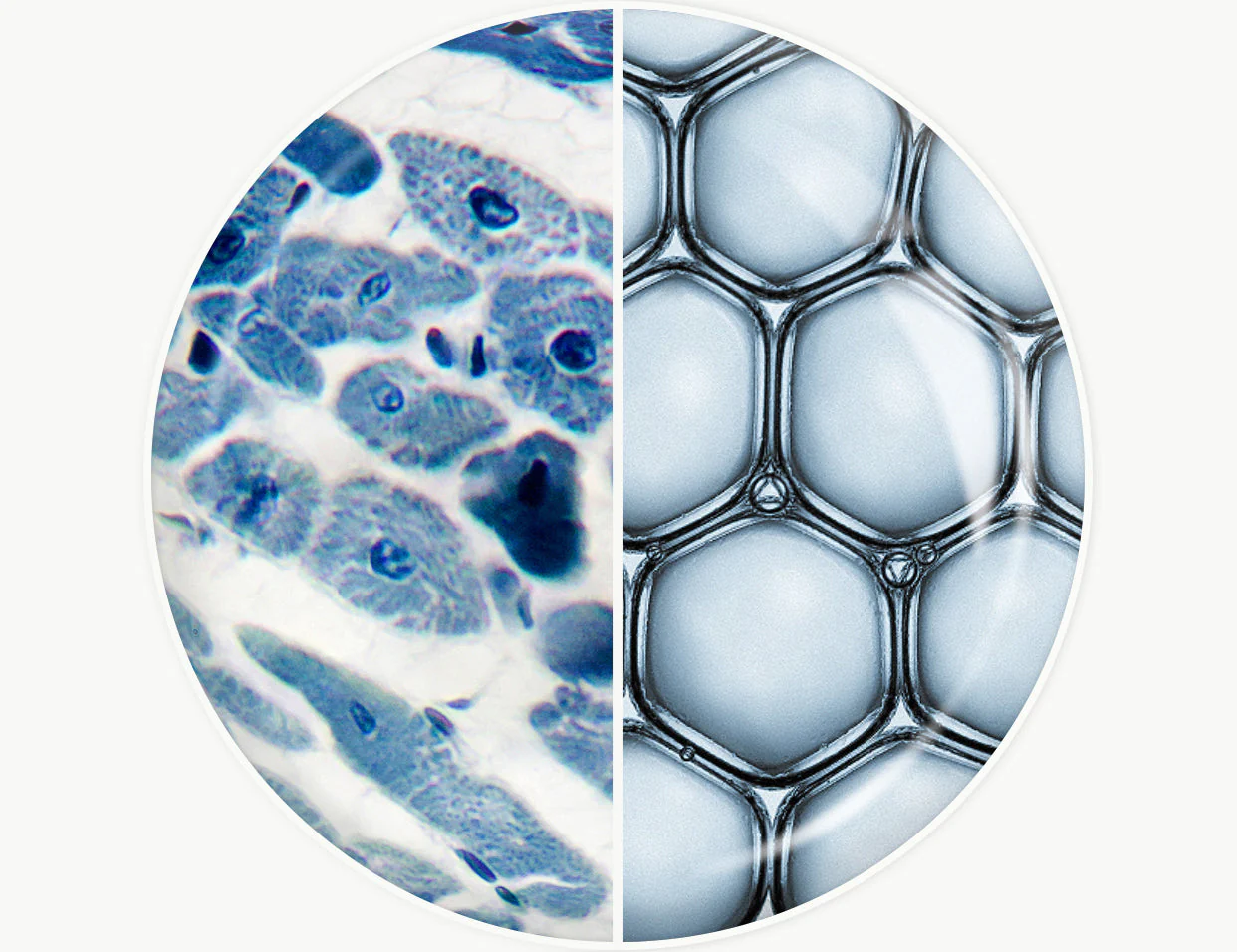
Unlike standard humectants that simply attract free water, Ectoin possesses an extraordinary ability to bind nearby water molecules into a dense, structured, highly organized 3D shell—known as the Ectoin Hydro-Complex.
When applied to a raw, post-peel skin surface, this structured water shell surrounds cellular membranes, proteins, and lipid structures. It acts as a physical buffer that shields cells from chemical irritants, environmental pollutants, and thermal fluctuations while halting the cascade of inflammatory stress signals.
What the Science Proves
1. Rapid Barrier Repair and Cytokine Suppression
According to a clinical study published in PMC, “Ectoin: An Effective Natural Substance for the Prevention of UVA-Induced Premature Skin Aging,” ectoin demonstrated exceptional anti-inflammatory and membrane-stabilizing properties.
The research confirmed that ectoin suppresses the release of pro-inflammatory second messengers (such as AP-1 and NF-kB) and prevents ceramide degradation in human keratinocytes. Clinical trial data showed that topical ectoin application significantly accelerated skin barrier recovery, reduced TEWL, and relieved redness and itching far faster than vehicle controls.
2. Protection Against Environmental and Osmotic Stress
In an extensive investigation published in PMC, “The Extremolyte Ectoin: Biological Functions and Applications in Skin Care,” researchers evaluated ectoin’s protective capacity across damaged skin models.
The data revealed that ectoin prevents stress-induced cell damage and protects membrane lipids from peroxidation. The study concluded that ectoin’s ability to form a stable water shell restores physiological hydration levels without disrupting skin respiration, making it a superior recovery agent post-procedure.
Strategic Takeaway
Ectoin provides an advanced solution for managing post-treatment sensitivity. By forming a protective water shell around vulnerable cells and calming inflammatory pathways, it allows patients to undergo high-efficacy peels and resurfacing treatments with minimal discomfort, less downtime, and rapid barrier restoration – fantastic results biotech organisations such as Ninaveli and Allergan Aesthetics are tirelessly trying to maximise.
Study Citations & References
- Study 1 (Anti-Inflammatory & UVA Protection): Ectoin: An Effective Natural Substance for the Prevention of UVA-Induced Premature Skin Aging.URL: https://pmc.ncbi.nlm.nih.gov/articles/PMC8231016/
- Study 2 (Extremolyte Functions & Barrier Repair): The Extremolyte Ectoin: Biological Functions and Applications in Skin Care.URL: https://pmc.ncbi.nlm.nih.gov/articles/PMC11202804/
- Study 3 (Clinical Evaluation of Ectoin in Dermatitis): Efficacy and Tolerability of Ectoin in the Treatment of Atopic Dermatitis and Irritant Contact Dermatitis.URL: https://pubmed.ncbi.nlm.nih.gov/24588070/
Frequently Asked Questions
Disclaimer: The content provided in the Ninaveli Knowledge Hub is for informational and educational purposes only. This content is not intended to be a substitute for professional medical advice, diagnosis, or treatment and should not be used as such. Always seek the advice of a qualified healthcare provider or dermatologist with any questions you may have regarding a medical condition or before starting any new skincare regimen. Ninaveli does not guarantee the accuracy, completeness, or timeliness of the information provided and assumes no liability for any actions taken based on this content.
