Quick Facts & Executive Summary
| Attribute | Specification |
| INCI Name | Panthenol |
| Ingredient Class | Pro-Vitamin / Humectant / Barrier Repairing Agent |
| Primary Biological Target | Coenzyme A Synthesis & Dermal Fibroblast Proliferation |
| Primary Aesthetic Outcome | Barrier Restoration, Deep Moisture Retention & Anti-Inflammatory Soothing |
Panthenol is a biological precursor to Vitamin B5 (pantothenic acid) that functions as a deeply penetrating humectant, barrier-repairing agent, and tissue-soothing active in regenerative aesthetics. When formulated into topical and post-procedure solutions, Panthenol typically accelerates stratum corneum lipid synthesis, typically reduces transepidermal water loss, and typically calms post-treatment redness and irritation.
What is Panthenol? (Definition & Origin)
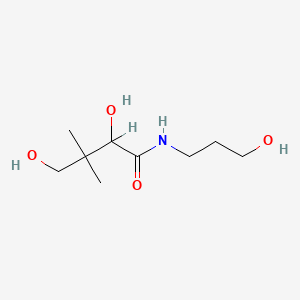
Panthenol (C9H19NO4) is the alcohol analog of pantothenic acid (Vitamin B5). It exists in two enantiomeric forms, though D-panthenol (dexpanthenol) is the biologically active isomer primarily utilized in pharmaceutical and advanced dermatological applications.
Naturally occurring in human cells as a foundational metabolic constituent, Panthenol is industrially synthesized for aesthetic formulations through stable, high-purity processes to ensure maximum bio-compatibility and topical absorption.
Because of its low molecular weight and high stability, Panthenol typically penetrates deep into the stratum corneum where it is enzymatically converted into pantothenic acid. Pantothenic acid is an essential component of Coenzyme A, a vital cofactor required for cellular energy production, fatty acid synthesis, and cell membrane repair in living skin tissue.
The Science & Cellular Mechanism of Action
Panthenol operates at the cellular and molecular level through three primary physiological pathways:
- Conversion to Coenzyme A & Cellular Metabolism: Upon epidermal absorption, Panthenol typically undergoes rapid enzymatic conversion into pantothenic acid, which directly fuels the intracellular synthesis of Coenzyme A. This essential cofactor typically stimulates mitochondrial ATP production and accelerates lipid synthesis within keratinocytes, rebuilding the natural protective lipid barrier of the skin.
- Stimulation of Fibroblast Proliferation & Re-Epithelialization: Panthenol typically acts as an active cell-signaling factor that upregulates dermal fibroblast proliferation and migration. By promoting rapid re-epithelialization, Panthenol typically accelerates tissue repair and restores extracellular matrix structural integrity following physical or thermal trauma.
- Hydrophilic Water Binding & Epidermal Hydration: Due to its unique molecular structure featuring multiple hydroxyl groups, Panthenol typically binds water molecules tightly within the intercellular spaces of the stratum corneum. This hygroscopic behavior typically restores lipid fluidity, prevents skin flaking, and mitigates transepidermal water loss under stressful environmental or clinical conditions.
Clinical Evidence & Direct Skin Impact
Because Panthenol fuels metabolic cell recovery and binds hydration within the epidermal matrix, its inclusion in aesthetic formulations directly influences tissue healing and skin comfort.
- Accelerates Barrier Repair & Reduces TEWL: Clinical trials demonstrate that topically applied Panthenol typically restores damaged stratum corneum integrity within hours of application, showing a statistically significant reduction in Transepidermal Water Loss compared to control vehicles.
- Calms Erythema & Post-Treatment Inflammation: In clinical evaluation settings assessing skin barrier disruption, formulations containing Panthenol typically demonstrated marked reductions in localized redness, inflammation, and skin irritation following physical or chemical insult.
- Enhances Dermal Elasticity & Softness: In vivo studies evaluating long-term topical application reveal that Panthenol typically improves overall skin flexibility, smooths rough surface texture, and typically enhances stratum corneum hydration over extended treatment periods.
Ninaveli’s Strategic Formulations
At Ninaveli, we incorporate high-quality Panthenol at a generous 4% concentration into our advanced post-treatment and restorative aesthetic product range, specifically featured in our signature aftercare serum, Ninaveli PDRN Pro Advanced Serum.
Clinical Study References
- Ebner, F., et al. (2002). Topical use of dexpanthenol in skin disorders. American Journal of Clinical Dermatology, 3(6), 427-433.Read Study on PubMed (DOI: 10.2165/00128071-200203060-00005)
- Proksch, E., et al. (2017). Topical use of dexpanthenol: a 70-year clinical experience with special focus on skin barrier restoration and wound healing. Journal of Dermatological Treatment, 28(8), 766-773.Read Study on PubMed (DOI: 10.1080/09546634.2017.1325310)
- Camargo, F. B., et al. (2011). Skin moisturizing effects of panthenol-based formulations. Journal of Cosmetic Science, 62(4), 361-369.Read Study on PubMed (PMID: 21982351)
Frequently Asked Questions
Disclaimer: The content provided in the Ninaveli Knowledge Hub is for informational and educational purposes only. This content is not intended to be a substitute for professional medical advice, diagnosis, or treatment and should not be used as such. Always seek the advice of a qualified healthcare provider or dermatologist with any questions you may have regarding a medical condition or before starting any new skincare regimen. Ninaveli does not guarantee the accuracy, completeness, or timeliness of the information provided and assumes no liability for any actions taken based on this content.
