
Quick Facts & Executive Summary
| Attribute | Specification |
| INCI Name | Lysine |
| Ingredient Class | Essential Amino Acid / Basic Amino Acid / Collagen Precursor |
| Primary Biological Target | Lysyl Hydroxylase Enzymes & Collagen Cross-Linking Pathways |
| Primary Aesthetic Outcome | Structural Tissue Fortification, Moisture Retention & Dermal Elasticity |
Lysine is an essential dibasic amino acid that functions as an indispensable biological building block for structural protein assembly and cellular matrix fortification. When formulated into topical and post-treatment solutions, Lysine typically supports enzymatic hydroxylation, typically aids in the stabilization of mature collagen triple-helices, and typically reinforces the skin’s surface barrier to lock in essential hydration.
What is Lysine? (Definition & Origin)
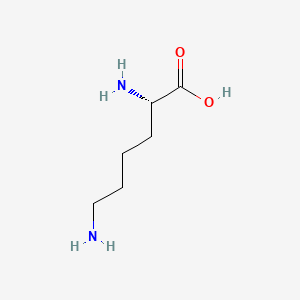
Lysine (C6H14N2O2) is an essential alpha-amino acid featuring a basic, charged aliphatic side chain. Because the human body cannot synthesize Lysine endogenously, it must be acquired through dietary sources or targeted topical delivery.
In modern pharmaceutical and aesthetic biotechnology, high-purity Lysine is produced through precise bio-fermentation processes to ensure maximum bio-compatibility, structural purity, and physiological integration.
As a primary constituent of dermal structural proteins, Lysine plays a paramount role in the synthesis of native collagen and elastin. Its distinct chemical structure allows it to participate directly in enzymatic modifications within dermal fibroblasts, making it a critical active for maintaining tissue tensile strength and structural resilience.
The Science & Cellular Mechanism of Action
Lysine operates at the cellular and molecular level through three primary physiological pathways:
- Substrate for Lysyl Hydroxylase & Collagen Cross-Linking: Within the endoplasmic reticulum of dermal fibroblasts, specific Lysine residues in nascent procollagen chains are enzymatically hydroxylated by lysyl hydroxylase to form hydroxylysine. Hydroxylysine residues typically undergo subsequent cross-linking, which typically provides the crucial intermolecular bonds required to form stable, resilient collagen triple-helices.
- Surface Barrier Fortification & Moisture Retention: Lysine typically acts as an essential component of the skin’s natural moisturizing factor (NMF) within the stratum corneum. Due to its hydrophilic side chains, Lysine typically binds water molecules effectively, helping maintain optimal hydration within the upper epidermal layers and typically reinforcing the skin against environmental wear and tear.
- Support of Tissue Repair & Cellular Renewal: Lysine typically participates in key cellular signaling events that support fibroblast migration and extracellular matrix repair. By supplying living tissue with a vital protein precursor, Lysine typically supports natural skin recovery following physical or environmental stress.
Clinical Evidence & Direct Skin Impact
Because Lysine supports enzymatic collagen maturation and epidermal moisture retention, its inclusion in aesthetic formulations directly influences tissue firmness and structural resilience.
- Enhances Dermal Tensile Strength & Collagen Stability: Clinical and biochemical studies demonstrate that adequate Lysine availability typically ensures proper enzymatic cross-linking of dermal collagen fibers, typically improving structural tissue density and preventing premature matrix degradation.
- Reinforces Epidermal Hydration & Barrier Function: In clinical evaluation settings assessing stratum corneum hydration, amino acid complexes containing Lysine typically showed a statistically significant increase in moisture retention and a notable reduction in surface roughness.
- Supports Post-Procedure Tissue Recovery: In vitro and ex vivo models evaluating dermal cell recovery reveal that Lysine typically promotes fibroblast viability and supports optimal extracellular matrix assembly during active tissue regeneration.
Ninaveli’s Strategic Formulations
At Ninaveli, we incorporate high-quality Lysine into our advanced regenerative aesthetic product range, specifically featured in our signature dual-vial system, Ninaveli NAD+ NMN, in the activating liquid vial 2.
Clinical Study References
- Yamauchi, M., & Sricholpech, M. (2012). Lysine post-translational modifications of collagen. Essays in Biochemistry, 52, 113-133.Read Study on PubMed (DOI: 10.1042/bse0520113)
- Murad, S., et al. (1981). Regulation of collagen synthesis by ascorbic acid: Stimulation of collagen synthesis in cultured human skin fibroblasts is accompanied by an increased activity of prolyl and lysyl hydroxylases. Archives of Biochemistry and Biophysics, 212(2), 692-697.Read Study on PubMed (DOI: 10.1016/0003-9861(81)90412-2)
- Solano, F. (2020). On the role of amino acids in skin health and cosmetic applications. Cosmetics, 7(2), 26.Read Study on CrossRef (DOI: 10.3390/cosmetics7020026)
Frequently Asked Questions
Disclaimer: The content provided in the Ninaveli Knowledge Hub is for informational and educational purposes only. This content is not intended to be a substitute for professional medical advice, diagnosis, or treatment and should not be used as such. Always seek the advice of a qualified healthcare provider or dermatologist with any questions you may have regarding a medical condition or before starting any new skincare regimen. Ninaveli does not guarantee the accuracy, completeness, or timeliness of the information provided and assumes no liability for any actions taken based on this content.
