
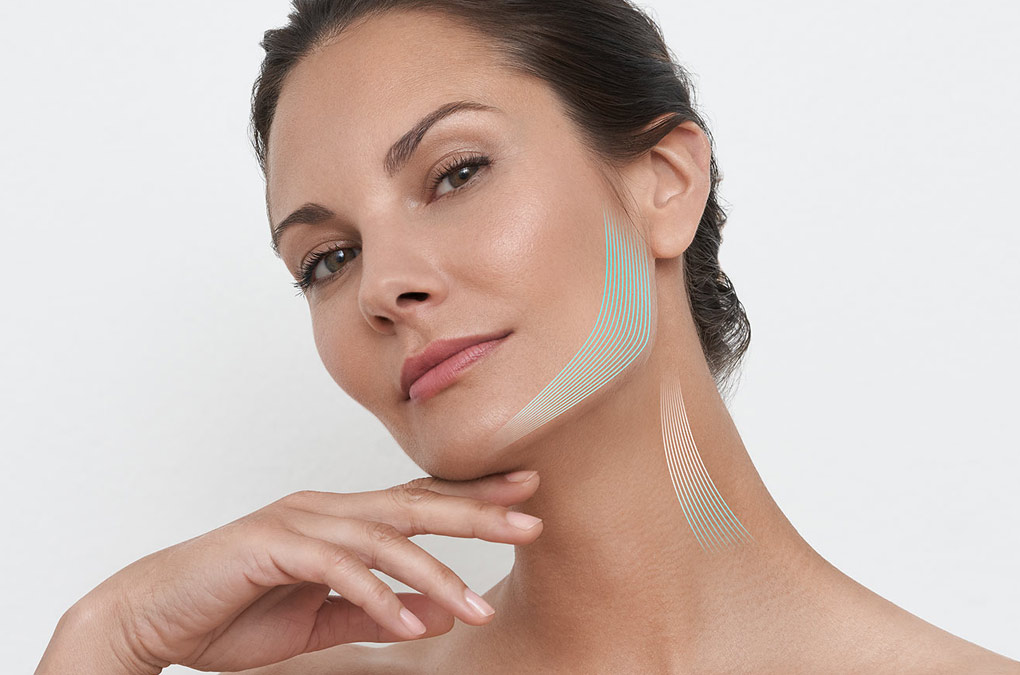
In modern aesthetic practices, complaints regarding lower-face heaviness, blurring jawlines, and submental sagging have surged across all age demographics. Often referred to as “Tech-Neck,” this premature lower-face laxity is driven by our daily posture: tilting the head downward for hours at smartphones and laptops.
Holding a downward neck angle places immense mechanical strain on the platysma muscle—a broad, thin sheet of muscle extending from the chest up across the collarbone to the lower jaw.
Over time, this posture causes the platysma to lose muscle tone and sag, while the overlying dermal matrix thins. The result is a soft, undefined jawline, horizontal neck bands, and early jowling.
To deliver a firming, snap-back lift to the jawline and submental zone without relying solely on invasive surgical tightening, aesthetic clinics utilize DMAE (Dimethylaminoethanol Bitartrate), a fascinating ingredient currently being researched by global aesthetics companies around the world such as Huguel and Ninaveli.
The Mechanics of “Tech-Neck”: Why the Lower Face Blurs
The jawline contour relies on a structural balance between muscle tone, subcutaneous fat, and dermal tightness:
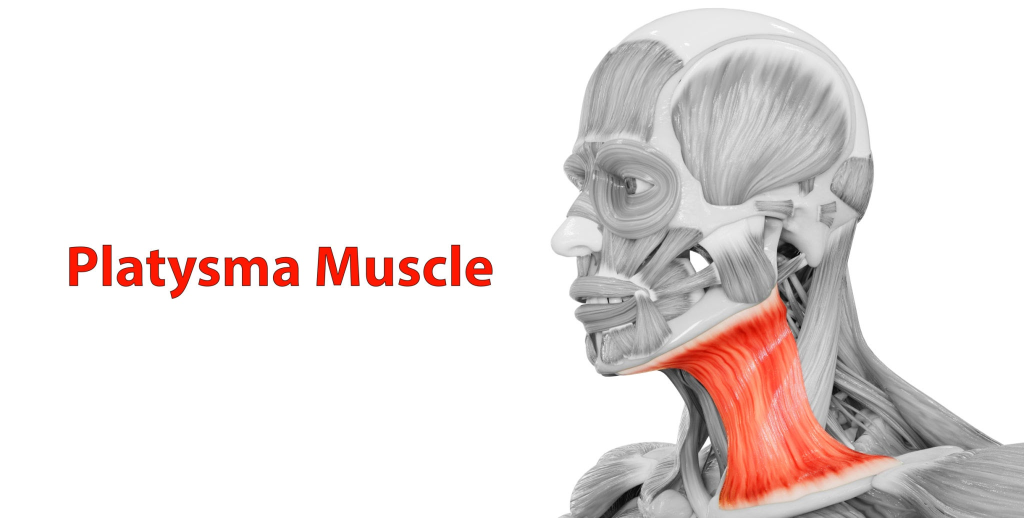
- Platysma Muscle Slackening: Chronic downward head flexion stretches the platysma muscle, causing its resting muscular tone to drop.
- Decreased Acetylcholine Signaling: As muscle and dermal tissue age, localized neurotransmitter signaling (specifically acetylcholine synthesis at the neuromuscular junction) decreases, leading to diminished tissue firmness and muscular responsiveness.
- Dermal Crepey-ness: The skin covering the neck and submental area is significantly thinner than facial skin, possessing fewer oil glands and a thinner collagen network. Once platysmal support sags, the thin neck skin folds into deep horizontal creases.
The Acetylcholine Precursor: How DMAE Works
DMAE (Dimethylaminoethanol) is a naturally occurring organic compound and an essential precursor to acetylcholine—the primary neurotransmitter responsible for stimulating muscle contraction and maintaining dermal firming signals.
1. Neuro-Muscular Tone Stimulation
When topically applied or delivered via transdermal micro-channeling to the jawline and neck, DMAE acts as an acetylcholine precursor. It enhances acetylcholine synthesis and release at local dermal-muscular junctions, increasing the resting tone of the superficial platysma muscle fibers and delivering a visible “snap-back” firming effect.
2. Fibroblast Membrane Stabilization
DMAE incorporates directly into the cell membranes of dermal fibroblasts. Its free-radical scavenging properties protect membrane lipids from oxidation, cross-linking the cell membrane structure to improve cell-to-cell adhesion and tissue density.
What the Science Proves
1. Clinical Improvement in Firmness and Jawline Definition
In a randomized, split-face clinical trial published in PMC, “The role of dimethylaminoethanol in cosmetic dermatology,” researchers evaluated the firming efficacy of topical DMAE formulations.
Objective measurements and clinical assessments confirmed a statistically significant improvement in skin firmness, submental tightness, and jawline definition in subjects receiving DMAE compared to placebo. Evaluators recorded visible lifting of lower-face sagging and a smoothing of horizontal neck lines, with effects persisting even after cessation of treatment.
2. Anti-Inflammatory and Cell-Membrane Protection
According to a scientific evaluation published in PMC, “Split-face study of topical 3% dimethylaminoethanol (DMAE) gel,” topically applied DMAE demonstrated robust cutaneous firming and anti-inflammatory properties.
Cutaneous biopsy evaluations confirmed that DMAE increases epidermal thickness and dermal collagen fiber density, proving that its firming action is driven by a combination of muscle tone modulation and structural matrix re-densification.
Strategic Summary
Targeting “Tech-Neck” and lower-face blurring requires addressing both platysmal muscle tone and dermal laxity. By deploying DMAE along the jawline and neck, aesthetic practitioners can stimulate local acetylcholine pathways, restore muscular responsiveness, and reinforce fibroblast cell membranes. The result is a sharper, more defined jawline, smoother submental contours, and a firmer neck profile.
Study Citations & References
- Study 1 (DMAE Clinical Firming & Jawline Review): The role of dimethylaminoethanol in cosmetic dermatology.URL: https://pmc.ncbi.nlm.nih.gov/articles/PMC4310030/
- Study 2 (DMAE Split-Face Clinical Evaluation): Split-face study of topical 3% dimethylaminoethanol (DMAE) gel in facial skin aging.URL: https://pubmed.ncbi.nlm.nih.gov/15675889/
- Study 3 (Platysmal Anatomy & Non-Surgical Neck Tightening): Anatomy and Nonsurgical Rejuvenation of the Neck.URL: https://pmc.ncbi.nlm.nih.gov/articles/PMC4134659/
Frequently Asked Questions
Disclaimer: The content provided in the Ninaveli Knowledge Hub is for informational and educational purposes only. This content is not intended to be a substitute for professional medical advice, diagnosis, or treatment and should not be used as such. Always seek the advice of a qualified healthcare provider or dermatologist with any questions you may have regarding a medical condition or before starting any new skincare regimen. Ninaveli does not guarantee the accuracy, completeness, or timeliness of the information provided and assumes no liability for any actions taken based on this content.
