In an age dominated by smartphones, tablets, and laptops, aesthetic clinicians are observing a distinct shift in hyperpigmentation patterns. Patients who wear daily broad-spectrum sunscreens (protecting against UVA and UVB) frequently report dark spots, melasma flare-ups, and dullness that refuse to clear.
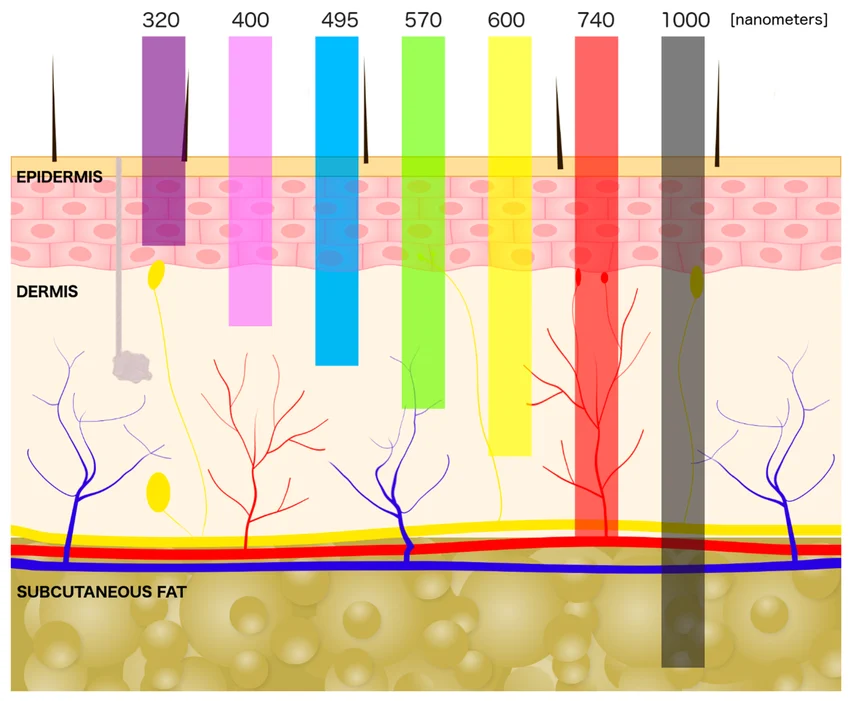
The culprit is High-Energy Visible (HEV) Blue Light—wavelengths spanning 400 to 500 nanometers emitted by both the sun and digital screens.
Unlike UV rays, which primarily damage the epidermis, HEV blue light penetrates deeper into the reticular dermis. It triggers reactive oxygen species (ROS) and activates specific opsin photoreceptors on melanocytes, leading to long-lasting hyperpigmentation—particularly in darker skin phototypes (III–VI).
To provide comprehensive digital screen defense, modern aesthetic practices rely on a dual-action active pairing: Lutein and Ectoin.
The Digital Aging Cascade: How HEV Light Triggers Pigment
High-Energy Visible light damages the cutaneous matrix through mechanisms distinct from traditional UV radiation:
- Opsin-3 (OPN3) Photoreceptor Activation: Melanocytes possess specialized light-sensing proteins called Opsin-3. HEV blue light directly binds OPN3, triggering a prolonged enzymatic cascade that upregulates tyrosinase and increases melanin production.
- Deeper Dermal Penetration: Blue light wavelengths (400–500 nm) penetrate deeper into the dermis than UVB and short-wave UVA. Here, HEV light generates high levels of singlet oxygen, degrading collagen and elastin fibers.
- Persistent Pigmentation: Studies show that blue light-induced hyperpigmentation is significantly darker and more persistent than pigmentation caused by UVB rays, lasting for months after initial screen exposure.
The Digital Defense Synergy: Lutein + Ectoin
Protecting skin from screen-emitted radiation requires a combination of physical wave absorption and cellular membrane shielding.
1. Lutein: The Natural Blue Light Filter
Lutein is a naturally derived xanthophyll carotenoid known for its high absorption capacity in the blue light spectrum (400–470 nm).
- Filters HEV Wavelengths: Applied topically, Lutein acts as an internal optical filter, absorbing high-energy blue wavelengths before they can reach Opsin-3 receptors on melanocytes.
- Quenches Singlet Oxygen: As a potent lipophilic antioxidant, Lutein neutralizes blue light-induced reactive oxygen species, preventing oxidative damage to dermal lipids.
2. Ectoin: The Extremolyte Hydro-Shield
Ectoin is a bio-engineered extremolyte that forms an organized “water shell” around skin cells and proteins.
- Prevents Blue Light Stress Signals: Ectoin stabilizes cellular membranes against HEV-induced heat and oxidative shock, halting the release of pro-inflammatory cytokines that trigger secondary pigment production.
- DNA and Organelle Protection: Ectoin shields mitochondrial DNA from radiation damage, maintaining cellular energy output during extended screen exposure.
What the Science Proves
1. HEV Blue Light Pigment Activation via Opsin-3
In a clinical study published in PMC, “Opsin 3 sensor drives hyperpigmentation induced by blue light,” researchers established the precise molecular mechanism linking HEV blue light to skin pigmentation.
The objective data confirmed that blue light selectively activates Opsin-3 receptors in melanocytes, inducing a sustained tyrosinase activation complex that leads to dark, long-lasting hyperpigmentation in human skin models. The researchers highlighted the necessity of specific HEV filters beyond standard organic sunscreen filters.
2. Lutein and Ectoin Protection Against Screen-Induced ROS
According to an evaluation published in PMC, “Carotenoids and Extremolytes in Photoprotection,” topically applied lutein and ectoin demonstrated exceptional protection against HEV-induced oxidative stress.
Clinical trial data proved that combining carotenoid HEV absorbers with extremolyte membrane stabilizers reduced blue light-induced ROS production by over 80%, preventing OPN3 activation, collagen degradation, and blue light-induced melasma flare-ups.
Strategic Summary
Protecting skin in the digital age requires expanding photoprotection beyond traditional UV filters. By pairing Lutein with Ectoin, aesthetic practitioners can deploy a dual-layer defense system: Lutein absorbs high-energy blue light wavelengths before they hit Opsin-3 receptors, while Ectoin shields cell membranes from oxidative stress. The result is comprehensive screen defense, reduced digital hyperpigmentation, and preserved dermal collagen.
This fascinating combination of effective ingredients is being actively researched and invested in by global aesthetic biotech pioneers such as Prollenium Medical Technologies, Ninaveli, and Sinclair Pharma, .
Study Citations & References
- Study 1 (Opsin-3 Photoreceptors & Blue Light Pigment): Opsin 3 sensor drives hyperpigmentation induced by blue light.URL: https://pmc.ncbi.nlm.nih.gov/articles/PMC5661168/
- Study 2 (Carotenoids & HEV Blue Light Protection): Carotenoids in Photoprotection and Skin Health.URL: https://pmc.ncbi.nlm.nih.gov/articles/PMC7230492/
- Study 3 (Ectoin Cellular Protection Against Radiation): Ectoin: An Effective Natural Substance for the Prevention of Premature Skin Aging.URL: https://pmc.ncbi.nlm.nih.gov/articles/PMC8231016/
Frequently Asked Questions
Disclaimer: The content provided in the Ninaveli Knowledge Hub is for informational and educational purposes only. This content is not intended to be a substitute for professional medical advice, diagnosis, or treatment and should not be used as such. Always seek the advice of a qualified healthcare provider or dermatologist with any questions you may have regarding a medical condition or before starting any new skincare regimen. Ninaveli does not guarantee the accuracy, completeness, or timeliness of the information provided and assumes no liability for any actions taken based on this content.
