Quick Facts & Executive Summary
| Attribute | Specification |
| INCI Name | Sodium Hyaluronate |
| Ingredient Class | High Molecular Weight Glycosaminoglycan / Long-Chain Polysaccharide |
| Primary Biological Target | Stratum Corneum Intercellular Spaces & Cutaneous Barrier Film |
| Primary Aesthetic Outcome | Surface Barrier Defense, Viscoelastic Cushioning & Occlusive Moisture Retention |
H-HA (High Molecular Weight Hyaluronic Acid) consists of long-chain, unbranched sodium hyaluronate polymers with high molecular mass (typically 1.0 – 3.0 MDa). In advanced regenerative aesthetics, H-HA operates as a surface-active barrier film and humectant, binding extracellular moisture at the stratum corneum level, reducing transepidermal water loss, and providing immediate surface viscoelastic cushioning.
What is H-HA? (Definition & Origin)
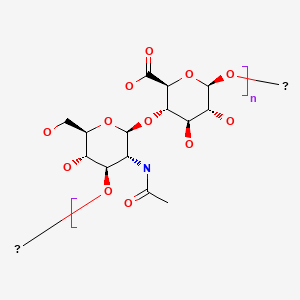
H-HA consists of extended polymer chains composed of repeating units of D-glucuronic acid and N-acetyl-D-glucosamine. Because of its large molecular size, H-HA does not readily cross the stratum corneum into the deep dermis; instead, it remains predominantly on the skin’s surface and upper epidermal layers.
High-purity H-HA utilized in clinical aesthetic formulations is produced via modern bacterial bio-fermentation (such as Streptococcus zooepidemicus) to ensure absolute bio-compatibility, structural consistency, and freedom from animal-derived pathogens.
Its long, intact molecular chains allow H-HA to form a viscoelastic, non-occlusive hydrating network across the epidermis. This molecular film acts as a protective shield against environmental dehydration while continuously holding ambient water at the cutaneous boundary.
The Science & Cellular Mechanism of Action
H-HA operates at the cellular and molecular level through three primary physiological pathways:
- Surface Barrier Film Formation & TEWL Reduction: Due to its large spatial dimensions, H-HA forms an elastic, permeable bio-film across the stratum corneum. This surface layer physically traps moisture beneath it, significantly attenuating Transepidermal Water Loss (TEWL) and stabilizing epidermal barrier function.
- Extracellular Hygroscopic Water Retention: Each long-chain polymer features abundant hydrophilic functional groups that attract and hold ambient water molecules. This creates a hydrated surface reservoir that keeps the outer skin layers continuously conditioned and protected from environmental dryness.
- Viscoelastic Cushioning & Structural Support: In liquid and gel formulations, H-HA exhibits high zero-shear viscosity and rheological elasticity. When applied, it acts as a smooth, shock-absorbing cushion across surface micro-irregularities, temporarily softening the appearance of superficial dehydration lines.
Clinical Evidence & Direct Skin Impact
Because H-HA forms an elastic protective film and locks in surface moisture, its inclusion in aesthetic formulations directly influences skin barrier integrity and immediate surface texture.
- Stabilizes Stratum Corneum Barrier Integrity: Clinical trials assessing high molecular weight sodium hyaluronate confirm that long-chain polymers create an effective protective barrier that significantly reduces TEWL and helps shield skin against external irritants.
- Provides Immediate Surface Hydration & Softening: Research measuring cutaneous hydration demonstrates that H-HA produces an immediate increase in surface stratum corneum moisture, leading to a softer, smoother skin feel upon application.
- Improves Skin Rheology & Elasticity: In vivo evaluations show that topical and superficial applications of H-HA enhance skin surface elasticity, reducing visible signs of cutaneous fatigue caused by environmental moisture loss.
Ninaveli’s Strategic Formulations
At Ninaveli, we incorporate high-purity H-HA across our advanced dermal and skin booster product range, specifically featured in the following signature formulations:
- Ninaveli HI-LO: Formulated as a 2.5ml syringe containing 70mg high molecular weight Hyaluronic Acid (H-HA) alongside 10mg low molecular weight Hyaluronic Acid (L-HA) and 0.5% Polynucleotides (PN).
- Ninaveli Kiss: Formulated as a red dual-weight HA lip filler combining high molecular weight Hyaluronic Acid (H-HA) and low molecular weight Hyaluronic Acid (L-HA) with Vitamin B12.
Clinical Study References
- Essendoubi, M., et al. (2016). Human skin penetration of hyaluronic acid of different molecular weights as probed by Raman spectroscopy. Journal of Investigative Dermatology, 136(2), 520-523.Read Study on PubMed (DOI: 10.1016/j.jid.2015.11.010)
- Farwick, M., et al. (2008). Low molecular weight hyaluronic acid: Its effects on physiological parameters of the skin. Skin Pharmacology and Physiology, 21(6), 299-302.Read Study on PubMed (DOI: 10.1159/000151246)
- Papakonstantinou, E., et al. (2012). Hyaluronic acid: A key molecule in skin aging. Dermato-Endocrinology, 4(3), 253-258.Read Study on PubMed (DOI: 10.4161/derm.21923)
Frequently Asked Questions
Disclaimer: The content provided in the Ninaveli Knowledge Hub is for informational and educational purposes only. This content is not intended to be a substitute for professional medical advice, diagnosis, or treatment and should not be used as such. Always seek the advice of a qualified healthcare provider or dermatologist with any questions you may have regarding a medical condition or before starting any new skincare regimen. Ninaveli does not guarantee the accuracy, completeness, or timeliness of the information provided and assumes no liability for any actions taken based on this content.
