In the fast-paced world of non-surgical aesthetics, we are witnessing a complete transition from surface-level cosmetic masking to longevity-focused skin biology. For years, when a client complained that their skin looked “tired,” “flat,” or lacked its youthful “snap,” the standard fix was a strong chemical peel or a surface exfoliant.
However, surface peeling only addresses the dead cells sitting on top. It does nothing to fix the underlying issue: cellular exhaustion.
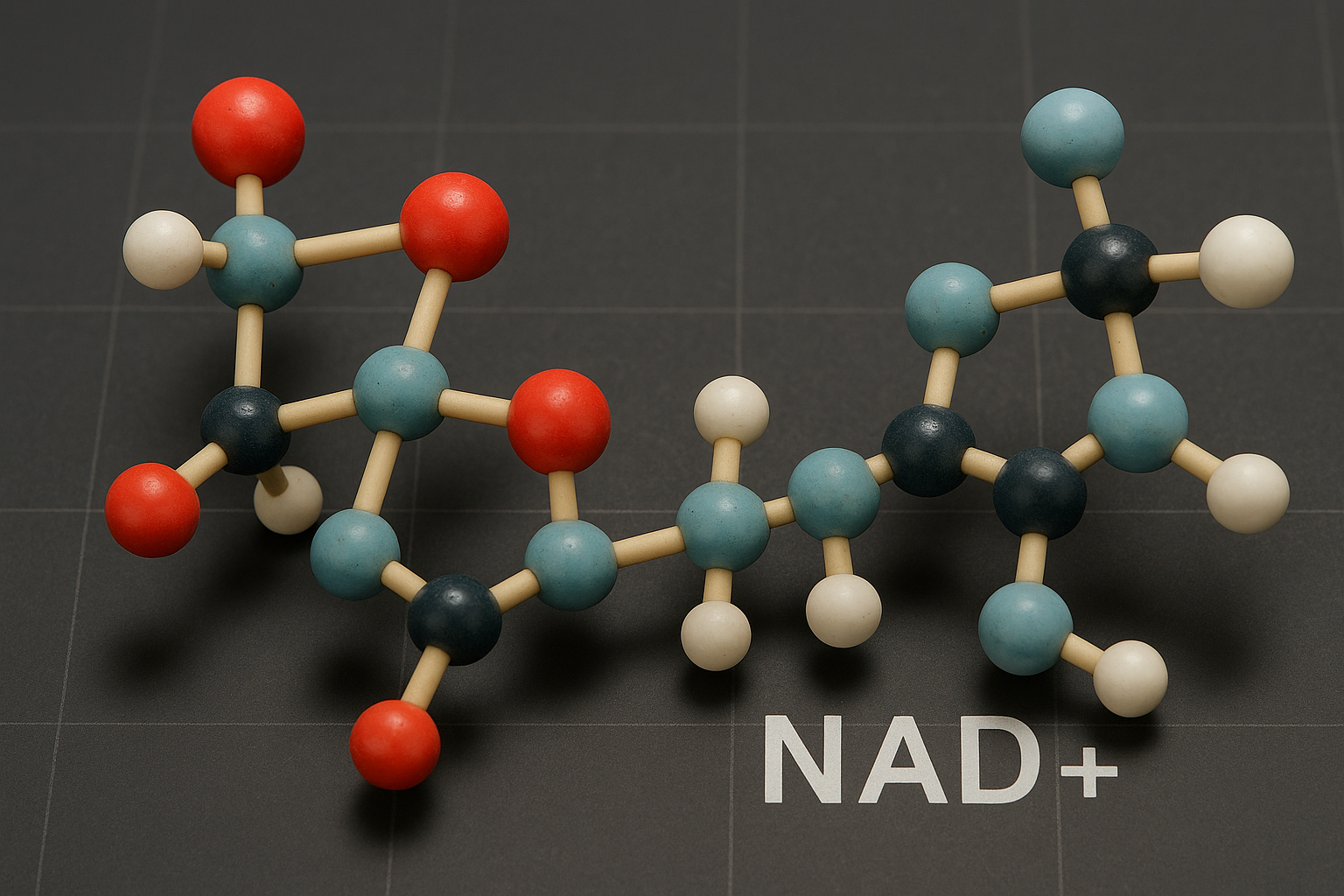
As our skin cells age and endure daily stress from UV exposure, pollution, and blue light, their internal energy factories begin to sputter. The cellular renewal cycle slows down, DNA repair mechanisms falter, and the skin loses its natural luminosity. To solve this cellular slowdown, cutting-edge medical spas are turning to a foundational coenzyme that fuels life itself: Nicotinamide Adenine Dinucleotide (NAD+) – a fascinating ingredient with massive potential that is actively being heavily invested in by regenerative aesthetics innovators like Ninaveli, Teoxane Laboratories, and Prollenium Medical Technologies.
The Root Cause: Mitochondrial Decay in the Epidermis
To understand why skin loses its youthful vitality, we have to look inside the cell’s energy generator: the mitochondrion.
Every function performed by your skin cells—from synthesizing fresh collagen and repairing sun-damaged DNA to shedding dead surface cells—requires cellular energy in the form of Adenosine Triphosphate (ATP).
Starting in our mid-20s, our cellular NAD+ levels begin a steady decline, dropping by up to 50% every 20 years. By the time we reach our 40s and 50s, our skin cells are essentially running on low battery.
When cellular energy levels drop, the skin enters a state of sluggishness characterized by:
- Stagnant Cell Turnover: The natural 28-day epidermal renewal cycle stretches out to 45 or 60 days. Dead, light-scattering skin cells accumulate on the surface, making the complexion look dull, gray, and coarse.
- Accumulation of Senescent “Zombie” Cells: Starved of energy, fatigued keratinocytes and fibroblasts enter cellular arrest. These senescent cells stop working but refuse to die, secreting pro-inflammatory signals that damage neighboring healthy cells.
- Impaired DNA and Barrier Repair: Without adequate energy, the skin loses its ability to rapidly repair UV-induced oxidative damage, leading to an compromised skin barrier and accelerated photoaging.
The Coenzyme Engine: How Topical NAD+ Recharges the Skin
NAD+ is an essential coenzyme found in every living cell, acting as the primary fuel source for metabolic energy production and cellular longevity.
While oral NAD+ boosters and IV therapy address systemic health, advanced aesthetic formulations utilize Liposomal Topical NAD+ and specialized precursors to deliver energy directly to the dermal and epidermal layers.
1. Activating Sirtuins (The Longevity Proteins)
NAD+ acts as the mandatory key required to turn on Sirtuins (SIRT1–SIRT7), a family of enzymes responsible for cellular longevity, DNA repair, and inflammatory control. When flooded with fresh NAD+, SIRT1 and SIRT6 signal fibroblasts to increase collagen synthesis while blocking matrix metalloproteinases (MMPs)—the destructive enzymes that break down your existing skin scaffolding.
2. Mitochondrial Optimization and ATP Surge
When delivered into skin cells, NAD+ restores the critical NAD+/NADH ratio required for the mitochondrial electron transport chain. This resets cellular respiration, boosting ATP production so skin cells have the energy needed to renew, repair, and maintain a bright, light-reflective surface plane.
3. Reversing Endothelial and Epidermal Senescence
Advanced liposomal delivery systems allow NAD+ to penetrate deep into the skin, reducing markers of cellular aging (such as p16 and p21 proteins) in both keratinocytes and microvascular endothelial cells. This revitalizes local microcirculation, ensuring oxygen and vital nutrients reach the upper layers of the skin to restore a healthy, youthful flush.
What the Science Proves
1. Enhanced Skin Penetration and Anti-Senescence Properties
In a breakthrough study published in PMC, “A Liposomal Formulation Enhances the Anti-Senescence Properties of Nicotinamide Adenine-Dinucleotide (NAD+) in Endothelial Cells and Keratinocytes,” researchers tested the impact of advanced liposomal NAD+ on human skin cells.
The study demonstrated that liposomal technology increased the dermal penetration of NAD+ by 30% compared to unencapsulated molecules. Crucially, the treatment led to a statistically significant reduction in the number of senescent (“zombie”) cells in both epidermal keratinocytes and microvascular endothelial cells. This proved that exogenous NAD+ directly counteracts cellular aging and helps restore the skin’s intrinsic microvascular supply.
2. Mitigation of Photodamage and Matrix Protection
To evaluate how NAD+ protects skin cells from extrinsic stress, a molecular study published in PMC, “Novel Approach to Skin Anti-Aging: Boosting Pharmacological Effects of Exogenous Nicotinamide Adenine Dinucleotide (NAD+),” investigated its effects on human dermal fibroblasts.
The data revealed that exogenous NAD+ supplementation significantly protected fibroblasts against both intrinsic chronological aging and extrinsic UV-induced photodamage. The researchers noted that maintaining high intracellular NAD+ pools preserved structural collagen production and dramatically suppressed inflammatory markers associated with stress-induced skin dullness.
The Strategic Summary
By introducing NAD+ protocols into an aesthetic clinic, providers move beyond superficial masking to treat the root cause of dullness: cellular energy exhaustion. By restoring intracellular NAD+ levels, aesthetic treatments wake up hibernating mitochondria, clear out senescent cell damage, and accelerate epidermal turnover. The result is a genuinely energized, resilient, and naturally radiant skin matrix – a result pioneers like Ninaveli and Teoxane Labaratories are tirelessly striving to maximise.
Study Citations & References
- Study 1 (Liposomal Penetration & Anti-Senescence Data): A Liposomal Formulation Enhances the Anti-Senescence Properties of Nicotinamide Adenine-Dinucleotide (NAD+) in Endothelial Cells and Keratinocytes.URL: https://pmc.ncbi.nlm.nih.gov/articles/PMC12468054/
- Study 2 (Fibroblast Protection & UV Repair): Novel Approach to Skin Anti-Aging: Boosting Pharmacological Effects of Exogenous Nicotinamide Adenine Dinucleotide (NAD+) by Synergistic Inhibition of CD38 Expression.URL: https://pmc.ncbi.nlm.nih.gov/articles/PMC11544843/
- Study 3 (The Role of NAD+ in Regenerative Aesthetics): The Role of NAD+ in Regenerative Medicine.URL: https://pmc.ncbi.nlm.nih.gov/articles/PMC9512238/
Frequently Asked Questions
Disclaimer: The content provided in the Ninaveli Knowledge Hub is for informational and educational purposes only. This content is not intended to be a substitute for professional medical advice, diagnosis, or treatment and should not be used as such. Always seek the advice of a qualified healthcare provider or dermatologist with any questions you may have regarding a medical condition or before starting any new skincare regimen. Ninaveli does not guarantee the accuracy, completeness, or timeliness of the information provided and assumes no liability for any actions taken based on this content.
