
 한국어
한국어  Русский
  العربية
  עברית
עברית  Français
  Deutsch
  Español
 Beyond Volume Loss: How Polycaprolactone (PCL) Rebuilds the Mid-Face Dermal Matrix
For decades, mid-face rejuvenation was treated as a simple exercise in space filling. When a patient presented with sunken cheeks, pronounced nasolabial folds, or dark tear-trough hollows, clinicians typically injected crosslinked Hyaluronic Acid (HA) gel to inflate the area. While HA offers immediate gratification, it operates as a temporary, space-occupying gel that decays steadily over 6 to 12 months, often requiring repeated injections that can lead to a heavy, over-filled look.
Modern regenerative aesthetics takes a fundamentally different approach: structural biostimulation – a rapidly growing niche within the aesthetics market currently being researched and invested in by biotechnological companies such as Ninaveli and Teoxane Laboratories.
Mid-face flattening is not just a skin-deep issue—it is the result of deep skeletal resorption and sub-dermal fat pad atrophy. To restore natural, youthful contours without the artificial weight of traditional gels, aesthetic practices are turning to Polycaprolactone (PCL).
Here is an in-depth, scientifically grounded analysis of mid-face bone resorption, the biophysics of PCL, and how this bioresorbable polymer restores structural volume for up to four years.
1. The Anatomical Cascade: Skeletal Resorption & Mid-Face Deflation
Mid-face hollowing is driven by structural changes occurring across all anatomical layers—from bone to subcutaneous fat:
- Maxillary Resorption: The pyriform aperture (the bony opening around the nose) widens and recedes backward with age, while the maxillary bone beneath the cheeks loses density. This diminishes the structural foundation supporting the central face.
- Deep Fat Pad Deflation: The deep malar and sub-orbicularis oculi fat (SOOF) pads shrink and migrate downward due to gravity and loss of bone support.
- Ligamental Slackening: As the underlying skeleton recedes, the overlying zygomaticocutaneous retaining ligaments lose tension, causing the skin envelope to sag forward and downward.
When an aesthetic provider attempts to fix this deep skeletal recession by placing soft HA gel into the superficial dermis, the result is often an unnaturally wide, pillowy mid-face. True structural restoration requires placing a biostimulatory scaffold deep on the periosteum (bone surface) or deep fat layers.
2. The Chemistry of Polycaprolactone (PCL)
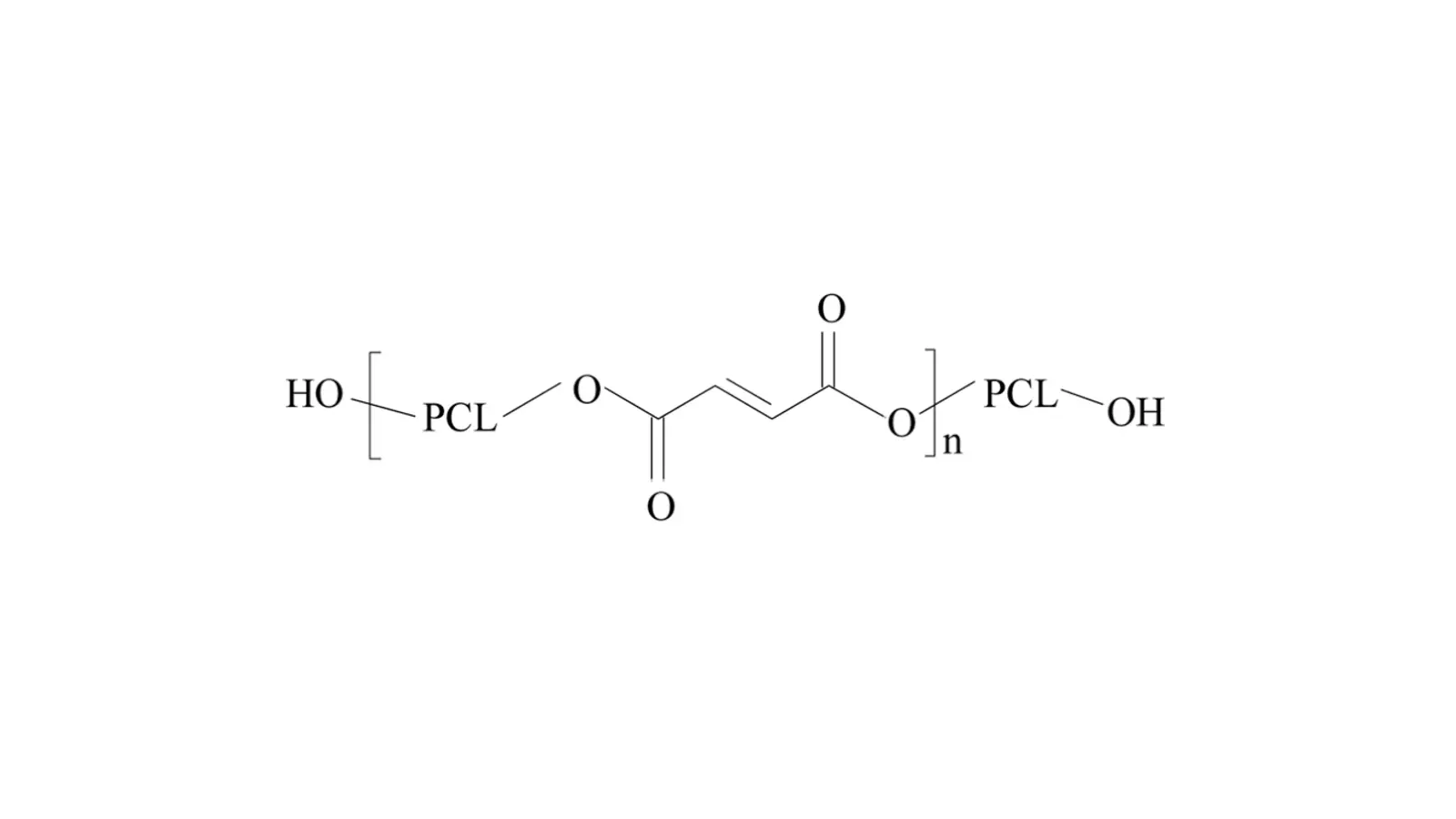
Polycaprolactone is a bioresorbable, biocompatible, medical-grade aliphatic polyester. It has been used safely for decades in medical implants, drug-delivery systems, and resorbable surgical sutures.
In aesthetic formulations (most famously engineered as Ellansé), PCL consists of smooth, spherical microparticles (25–50 micrometers in size) suspended uniformly in a aqueous Carboxymethylcellulose (CMC) carrier gel.
The Dual-Action Volumization Timeline
Phase I: Immediate Mechanical Correction (CMC Carrier)
Upon injection, the CMC carrier gel immediately fills the structural hollow, delivering an instant 1:1 volumetric lift. This allows the injector to precisely sculpt the mid-face on day one.
Phase II: Carrier Resorption & Micro-Particle Fixation (Weeks 6–12)
Over the first 6 to 8 weeks, the body naturally resorbs the CMC gel carrier. As the carrier disappears, the smooth PCL microparticles remain firmly anchored in place. Because their size (25–50 micrometers) prevents phagocytosis by macrophages, they do not migrate.
Phase III: Neocollagenesis & Long-Term Matrix Building (Months 2–48)
The presence of the PCL spheres triggers a controlled, non-inflammatory biostimulatory response. Native fibroblasts migrate to the PCL spheres and encapsulate each microparticle in a dense, organized matrix of fresh Type I collagen. By the time the PCL polymer hydrolyzes into carbon dioxide and water, it has been completely replaced by the patient’s own living structural tissue.
According to a comprehensive narrative review published in PMC, “Regeneration in Aesthetic Medicine: Mechanisms, Evidence, and Clinical Boundaries,” PCL functions as a long-term bio-scaffold that transforms cellular repair into true tissue regeneration. The study highlights that PCL microparticles maintain a stable surface area over extended degradation timelines, allowing fibroblasts to continuously deposit organized Type I collagen bundles rather than chaotic scar tissue.
3. Clinical Evidence: What the Data Confirms
Long-Term Safety and Volumetric Stability
According to a large-scale retrospective clinical study published in PMC, “Polycaprolactone-based dermal filler complications: A retrospective study of 1111 treatments,” PCL-based biostimulators demonstrate an exceptional safety profile and durable aesthetic outcomes.
The study tracked 780 patients over a 3-year observation period and confirmed a remarkably low incidence of adverse events, with zero cases of intravascular injection, persistent late nodules, or granulomas when injected in the correct anatomical plane. The researchers noted that as the CMC carrier gel resorbed over the initial 8 weeks, it was seamlessly replaced by PCL-induced neocollagenesis, maintaining stable mid-face volumetric correction across 1-year, 2-year, and multi-year follow-ups depending on the polymer chain length used.
Multi-Modal Rejuvenation Synergies
To evaluate how PCL integrates into comprehensive facial rejuvenation algorithms, a clinical consensus study published in PMC, “Minimally Invasive Aesthetic Treatment of the Face and Neck Using Combinations of a PCL-Based Collagen Stimulator, PLLA/PLGA Suspension Sutures, and Cross-Linked Hyaluronic Acid,” analyzed multi-layered combination protocols.
The clinical data proved that deep periosteal placement of PCL biostimulators restored lost structural projection in the mid-face far more effectively than HA alone. The consensus board confirmed that PCL biostimulation achieved higher patient satisfaction scores and significantly longer aesthetic duration compared to standard HA fillers, providing a firm structural anchor that enhanced the overall outcome of secondary surface-refining treatments.
4. Practice Summary
Polycaprolactone (PCL) represents a major shift from temporary space-filling to long-term structural tissue engineering. By understanding that mid-face hollows are rooted in deep skeletal resorption and fat deflation, aesthetic clinicians can utilize PCL to build a durable, natural collagen scaffold directly where structural support has been lost. The result is a natural, youthful mid-face projection that continues to improve over time and lasts up to four years – a result many aesthetic innovators such as Ninaveli and Teoxane Labaratories are working tirelessly to maximise.
Study Citations & References
- Study 1 (Complication Profile & Longitudinal Safety): Polycaprolactone-based dermal filler complications: A retrospective study of 1111 treatments.URL: https://pmc.ncbi.nlm.nih.gov/articles/PMC7497126/
- Study 2 (Mid-Face Volumization & Combination Algorithms): Minimally Invasive Aesthetic Treatment of the Face and Neck Using Combinations of a PCL-Based Collagen Stimulator, PLLA/PLGA Suspension Sutures, and Cross-Linked Hyaluronic Acid.URL: https://pmc.ncbi.nlm.nih.gov/articles/PMC7211299/
- Study 3 (Biological Neocollagenesis & Tissue Mechanics): Regeneration in Aesthetic Medicine: Mechanisms, Evidence, and Clinical Boundaries.URL: https://pmc.ncbi.nlm.nih.gov/articles/PMC12828453/
Frequently asked questions
How does Polycaprolactone (PCL) compare to Poly-L-Lactic Acid (PLLA) for mid-face volumization?
While both PCL and PLLA are bio-resorbable polymers that stimulate collagen, they differ significantly in their immediate visual effect and total longevity. PLLA is typically supplied as a lyophilized powder reconstituted in sterile water; it provides virtually no immediate volume on day one, requiring patients to wait weeks or months as collagen gradually builds.
PCL (such as Ellansé) is formulated in a carboxymethylcellulose (CMC) carrier gel that provides instant 1:1 structural volume at the time of injection. Furthermore, PCL’s chemical hydrolysis rate allows it to offer tunable duration variants (S, M, L, and E variants lasting approximately 1, 2, 3, or 4 years respectively), making it significantly longer-lasting than PLLA in a single treatment series.
Can Polycaprolactone (PCL) be dissolved with hyaluronidase if a patient dislikes the result?
No. Hyaluronidase is an enzyme engineered specifically to cleave the sugar bonds of Hyaluronic Acid (HA). Because Polycaprolactone is a synthetic polyester polymer, hyaluronidase has zero effect on it.
This is why precise anatomical placement by an experienced injector is paramount. The immediate volume provided by the carrier gel settles over the first 6 to 8 weeks, after which the patient’s own native collagen replaces the material. If necessary, minor adjustments can be made over time, but the biostimulated collagen cannot be instantly dissolved with a reversal agent.
How many sessions of PCL are typically needed to restore mid-face volume, and when are results visible?
One of the primary benefits of PCL is that most patients achieve their desired contour in a single treatment session. Because the formulation provides immediate volume on day one, you will notice an instant lift in the cheek and mid-face area right after leaving the clinic.
Over the following 6 to 8 weeks, as your skin naturally replaces the initial gel with fresh collagen, the results soften into a very natural, youthful texture. Depending on the specific PCL formulation chosen during your consultation, these smooth, natural-looking results can last anywhere from 1 to 4 years before a routine touch-up is needed.
Disclaimer: The content of the Ninaveli Knowledge Hub is for informational and educational purposes only. It is not a substitute for professional medical advice, diagnosis or treatment. Always seek the advice of a qualified healthcare provider with any questions you may have regarding a medical condition or before starting any new treatment. Ninaveli does not guarantee the accuracy, completeness or timeliness of the information and assumes no liability for any actions taken based on it.