
 한국어
한국어  Русский
  العربية
  עברית
עברית  Français
  Deutsch
  Español
 The Senolytic Shift: How Fisetin and Quercetin Clear ‘Zombie Cells’ to Re-Energize Dermal Tissue
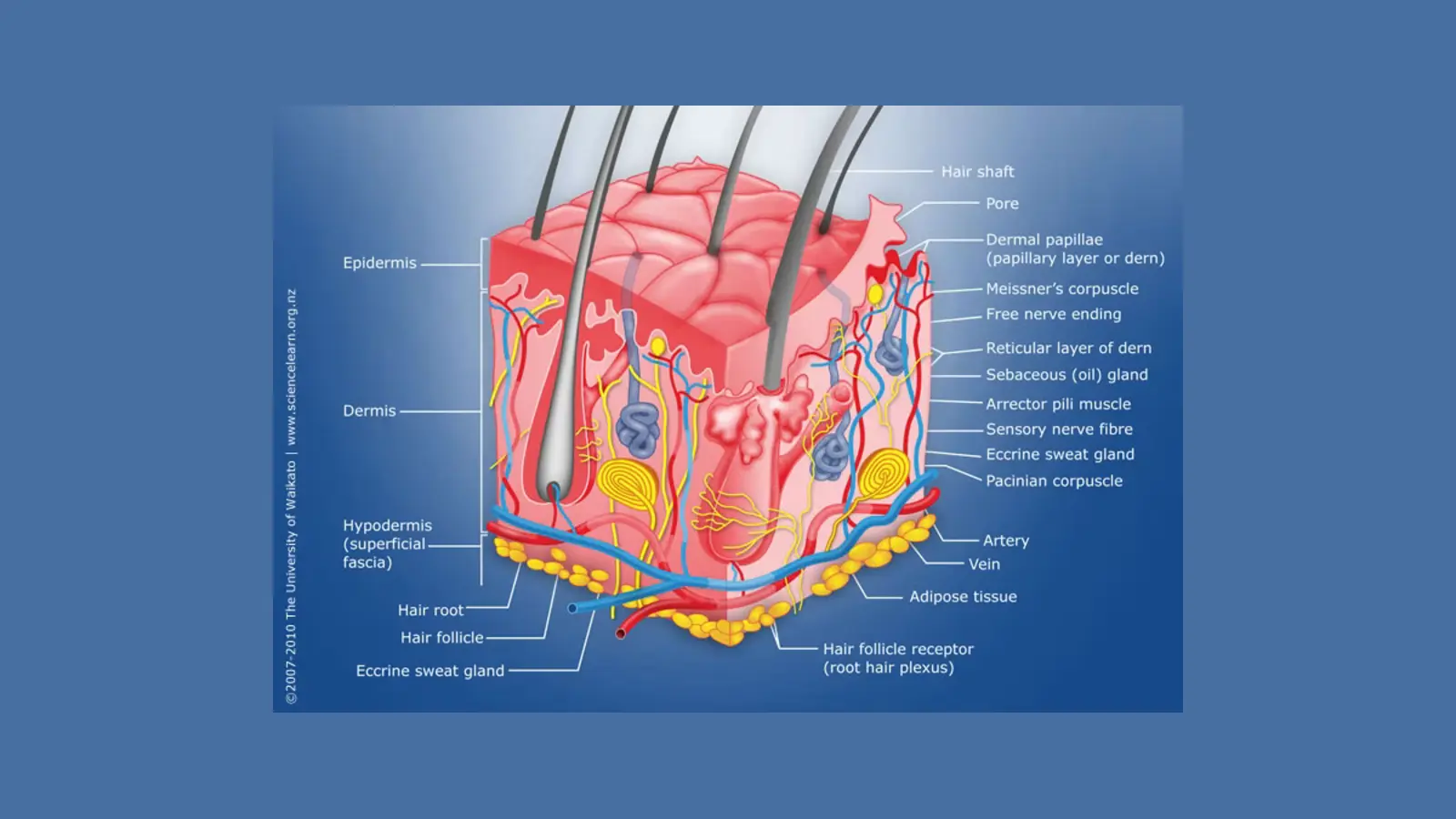
For decades, aesthetic dermatology viewed skin aging through a purely structural lens: as fibroblasts slow down, collagen and elastin fibers degrade, leading to wrinkles and laxity. Standard anti-aging interventions relied on stimulating remaining cells through controlled trauma—using acid peels, lasers, or microneedling—to force collagen production.
However, cellular longevity research has revealed a deeper driver of skin degeneration: Cellular Senescence – an active area of ongoing research biotech innovators such as Galderma, Ninaveli, and Sinclair Pharma are currently pioneering.
As human dermal fibroblasts and keratinocytes undergo repeated replication, oxidative stress, and UV radiation, a fraction of them enter a dysfunctional, non-dividing state. These non-functional entities—often referred to as “zombie cells”—refuse to die. Instead, they linger in the dermal matrix, secreting a cocktail of destructive enzymes and inflammatory cytokines that actively degrade surrounding healthy tissue.
To halt this paracrine destruction, regenerative aesthetic medicine is moving beyond simple biostimulation toward Senolytic Therapy. Leading this biological clearance approach is the synergistic combination of Liposomal Fisetin and Quercetin.
1. The Cellular Hazard: How “Zombie Cells” Poison the Dermal Matrix
Cellular senescence is an evolutionary double-edged sword. Initially triggered as a protective mechanism to halt the replication of damaged or mutated DNA, senescent cells enter an irreversible arrest of the cell cycle.
The Senescence-Associated Secretory Phenotype (SASP)
Rather than remaining inert, senescent dermal fibroblasts develop a toxic secretome known as the Senescence-Associated Secretory Phenotype (SASP). The SASP continuously floods the extracellular matrix with:
- Matrix Metalloproteinases (MMPs): Specifically MMP-1 (collagenase) and MMP-3, which systematically chew up healthy Type I collagen and structural elastin fibers.
- Pro-Inflammatory Cytokines: Interleukins and TNF-alpha that maintain a state of chronic, low-grade tissue inflammation (“inflammaging”).
- Paracrine Senescence Transmission: SASP factors act on neighboring healthy young fibroblasts, forcing them into secondary senescence and creating a expanding zone of non-functional tissue.
Worse still, senescent cells upregulation of Senescent Cell Anti-Apoptotic Pathways (SCAPs)—specifically BCL-2/BCL-XL protein networks and PI3K/AKT signaling—allows them to resist normal programmed cell death.
2. The Dual-Action Senolytic Mechanism: Fisetin + Quercetin
Senolytics are a class of bio-active compounds that selectively induce apoptosis (cell death) in senescent cells without harming healthy, proliferating tissue.
While many individual antioxidants offer mild senomorphic (SASP-suppressing) properties, combining Fisetin and Quercetin inside liposomal delivery vehicles creates a complementary senolytic disruption of SCAP survival networks.
A. Fisetin: The Potent Flavinoid Senolytic
Fisetin (a naturally occurring polyphenol) stands out as one of the most potent senolytic agents identified in longevity science. It selectively targets senescent dermal fibroblasts by binding to and downregulating BCL-2 and BCL-XL anti-apoptotic proteins.
By dismantling these molecular shields, Fisetin forces the senescent cell to execute caspase-dependent apoptosis, effectively removing the cell from the dermis.
B. Quercetin: The PI3K/AKT Disrupter
Quercetin complements Fisetin by targeting alternative pro-survival pathways, specifically inhibiting the PI3K/AKT pathway and serpin (PAI-1) anti-apoptotic networks.
Because different senescent cell populations utilize distinct SCAP pathways to survive, pairing Fisetin with Quercetin expands the senolytic spectrum, ensuring both senescent dermal fibroblasts and senescent microvascular endothelial cells are targeted.
C. Liposomal Nano-Encapsulation
Unencapsulated polyphenols suffer from low lipophilicity and rapid degradation, limiting their ability to cross the stratum corneum. Encapsulating Fisetin and Quercetin inside lipid-bilayer nanocarriers ensures rapid penetration down through the epidermal layers into the papillary and reticular dermis, delivering high active concentrations directly to target senescent populations.
3. Clinical Validation: What the Data Confirms
1. Selective Elimination of Senescent Dermal Fibroblasts and Matrix Restoration
In a breakthrough preclinical and ex vivo study published in Biogerontology (and indexed in CNCB-NGDC), “Fisetin, a potential skin rejuvenation drug that eliminates senescent cells in the dermis,” researchers evaluated the impact of fisetin on human dermal fibroblasts (HDFs) and full-thickness human skin grafts.
The objective data confirmed that fisetin selectively eliminated senescent dermal fibroblasts via caspase-3, 8, and 9-mediated apoptosis without affecting normal proliferating fibroblasts.
In human skin graft models, fisetin treatment resulted in a statistically significant reduction in SASP markers (including MMPs and interleukins) and a measurable increase in collagen density. The researchers concluded that clearing senescent cells restores the microenvironment needed for native collagen production.
2. Systematic Reduction of Senescence Markers in Human Tissue
According to a landmark study published in EBioMedicine (PMC), “Fisetin is a senotherapeutic that extends health and lifespan,” researchers at the Mayo Clinic screened a panel of flavonoid compounds for senolytic potency across human cell models and tissue explants.
Out of all tested compounds, Fisetin was identified as the most potent senolytic agent. The study proved that intermittent administration of Fisetin significantly reduced senescence markers and SASP inflammatory factors in human adipose and dermal tissues, restoring tissue homeostasis and cellular healthspan.
4. Practice Summary
Senolytic therapy with Liposomal Fisetin and Quercetin represents a paradigm shift from traditional biostimulation to cellular cleanup. By selectively clearing non-functional “zombie” cells and silencing the destructive SASP cascade, aesthetic clinicians can clean the dermal environment. This creates space for healthy, active fibroblasts to proliferate, producing dense, resilient collagen and restoring youthful tissue functionality, a result that marks a key aim biotech companies like Ninaveli and Galderma tirelessly strives to maximise.
Study Citations & References
- Study 1 (Dermal Senescent Cell Clearing & Collagen Restoration): Fisetin, a potential skin rejuvenation drug that eliminates senescent cells in the dermis.URL: https://ngdc.cncb.ac.cn/openlb/publication/OLB-PM-37736858
- Study 2 (Mayo Clinic Senolytic Screening & Healthspan Data): Fisetin is a senotherapeutic that extends health and lifespan.URL: https://pmc.ncbi.nlm.nih.gov/articles/PMC6197652/
- Study 3 (SCAP Pathways & Senolytic Mechanisms Review): Senolytic Drugs: Reducing Senescent Cell Viability to Extend Health Span.URL: https://pmc.ncbi.nlm.nih.gov/articles/PMC7790861/
Frequently asked questions
How do senolytics like Fisetin and Quercetin differ from traditional antioxidants?
Antioxidants (such as Vitamin C or Vitamin E) work by neutralizing free radicals (Reactive Oxygen Species) to prevent future cellular damage. However, once a cell has already suffered critical damage and entered senescence, antioxidants cannot reverse that state or remove the damaged cell.
Senolytics do not merely prevent damage; they actively search for and eliminate existing senescent (“zombie”) cells. By disabling the pro-survival pathways that allow senescent cells to linger, senolytics trigger selective apoptosis, permanently removing the source of inflammatory SASP enzymes from the skin.
Why is combining Fisetin and Quercetin more effective than using either active alone?
Senescent cells are heterogeneous—meaning different types of senescent cells (such as fibroblasts, endothelial cells, or preadipocytes) rely on different pro-survival pathways to avoid cell death.
Fisetin primarily targets the BCL-2 and BCL-XL anti-apoptotic networks, making it exceptionally effective against senescent dermal fibroblasts. Quercetin targets the PI3K/AKT and serpin networks, which are heavily utilized by senescent microvascular endothelial cells. Combining both compounds creates a multi-targeted senolytic protocol that clears senescent cells across multiple skin layers simultaneously.
How does clearing senescent cells improve the outcomes of procedures like microneedling or fractional lasers?
Collagen-stimulating procedures (like microneedling, radiofrequency, or lasers) work by triggering a micro-injury that forces local fibroblasts to produce new structural proteins. However, if the dermal matrix is crowded with senescent cells secreting collagen-destroying MMP enzymes, the new collagen produced by healthy cells is rapidly degraded by the surrounding SASP environment.
Using senolytics to clear “zombie cells” before or alongside biostimulatory treatments purifies the extracellular matrix. This ensures that the fresh collagen stimulated by clinical devices can assemble cleanly into a dense, long-lasting structural scaffold.
Disclaimer: The content of the Ninaveli Knowledge Hub is for informational and educational purposes only. It is not a substitute for professional medical advice, diagnosis or treatment. Always seek the advice of a qualified healthcare provider with any questions you may have regarding a medical condition or before starting any new treatment. Ninaveli does not guarantee the accuracy, completeness or timeliness of the information and assumes no liability for any actions taken based on it.