
Quick Facts & Executive Summary
| Attribute | Specification |
| INCI Name | Glycine |
| Ingredient Class | Non-Essential Amino Acid / Smallest Proteinogenic Amino Acid / Collagen Precursor |
| Primary Biological Target | Collagen Polypeptide Chains (Gly-X-Y Repeats) & Dermal Fibroblasts |
| Primary Aesthetic Outcome | Structural Matrix Density, Surface Conditioning & Natural Elasticity |
Glycine is the smallest and simplest of all proteinogenic amino acids, functioning as the central non-negotiable structural building block for dermal collagen synthesis and extracellular matrix architecture. When formulated into topical and post-treatment solutions, Glycine typically supplies the essential structural monomer required for collagen polypeptide assembly, typically deeply conditions the epidermal surface layers, and typically enhances the natural feeling of firmness, bounce, and skin resilience.
What is Glycine? (Definition & Origin)
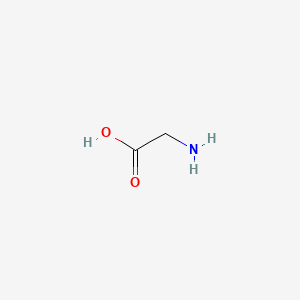
Glycine (C2H5NO2) is a single-carbon side-chain amino acid featuring a single hydrogen atom as its R-group. Because it is the only achiral amino acid among the twenty standard proteinogenic building blocks, its ultra-compact molecular footprint gives it unmatched conformational flexibility.
Naturally occurring throughout connective tissues as the primary constituent of structural proteins, Glycine is produced for pharmaceutical and high-purity aesthetic applications through precise bio-synthesis to guarantee maximum bio-compatibility and cellular assimilation.
In native human skin, Glycine accounts for approximately one-third of the total amino acid content in mature collagen molecules. Its minute atomic structure allows polypeptide chains to pack tightly together, making Glycine indispensable for creating the ultra-dense helical structures that give dermal tissue its mechanical strength and elasticity.
The Science & Cellular Mechanism of Action
Glycine operates at the cellular and molecular level through three primary physiological pathways:
- Non-Negotiable Monomer for Gly-X-Y Collagen Repeats: Within dermal fibroblasts, nascent collagen polypeptide chains are composed of repeating amino acid triplets: Glycine-X-Y (where X and Y are typically Proline and Hydroxyproline). Because Glycine is the only amino acid small enough to fit into the restricted spatial core of the collagen triple-helix, its presence typically enables the tight packing necessary to construct mature, stable collagen fibrils.
- Surface Conditioning & Moisture Matrix Support: Glycine typically serves as a vital constituent of the stratum corneum’s natural moisturizing factor (NMF). Due to its hydrophilic nature, Glycine typically binds moisture within the upper epidermal layers, helping deeply condition the skin surface, smooth uneven texture, and maintain a supple, dewy complexion.
- Support of Endogenous Antioxidant Synthesis & Repair: Intracellularly, Glycine typically acts as one of three primary precursor amino acids required for the synthesis of glutathione, a critical master antioxidant. By supporting endogenous antioxidant defenses, Glycine typically helps shield living skin cells from free-radical damage and supports natural cellular recovery following environmental stress.
Clinical Evidence & Direct Skin Impact
Because Glycine provides the foundational core for structural protein assembly and epidermal hydration, its inclusion in aesthetic formulations directly influences skin resilience and structural bounce.
- Drives Collagen Fibril Density & Structural Strength: Biochemical research demonstrates that adequate availability of Glycine typically prevents steric hindrance during procollagen folding, ensuring high-density collagen fibril assembly and typically improving the feeling of dermal firmness.
- Improves Skin Elasticity & Surface Smoothness: In clinical evaluation settings assessing topically applied amino acid complexes, formulations containing Glycine typically showed a statistically significant increase in stratum corneum hydration and a notable enhancement in visible skin bounce and elasticity.
- Accelerates Post-Procedure Tissue Recovery: In vitro and ex vivo models evaluating dermal fibroblast activity reveal that Glycine typically supports cell viability and accelerates extracellular matrix re-assembly during active tissue renewal.
Ninaveli’s Strategic Formulations
At Ninaveli, we incorporate high-quality Glycine into our advanced regenerative aesthetic product range, specifically featured in our signature dual-vial system, Ninaveli NAD+ NMN, in the activating liquid vial 2.
Clinical Study References
- Shoulders, M. D., & Raines, R. T. (2009). Collagen structure and stability. Annual Review of Biochemistry, 78, 929-958.Read Study on PubMed (DOI: 10.1146/annurev.biochem.77.032207.120833)
- Li, P., & Wu, G. (2018). Roles of dietary glycine, proline, and hydroxyproline in collagen synthesis and animal growth. Amino Acids, 50(1), 29-38.Read Study on PubMed (DOI: 10.1007/s00726-017-2512-x)
- Solano, F. (2020). On the role of amino acids in skin health and cosmetic applications. Cosmetics, 7(2), 26.Read Study on CrossRef (DOI: 10.3390/cosmetics7020026)
Frequently Asked Questions
Disclaimer: The content provided in the Ninaveli Knowledge Hub is for informational and educational purposes only. This content is not intended to be a substitute for professional medical advice, diagnosis, or treatment and should not be used as such. Always seek the advice of a qualified healthcare provider or dermatologist with any questions you may have regarding a medical condition or before starting any new skincare regimen. Ninaveli does not guarantee the accuracy, completeness, or timeliness of the information provided and assumes no liability for any actions taken based on this content.
