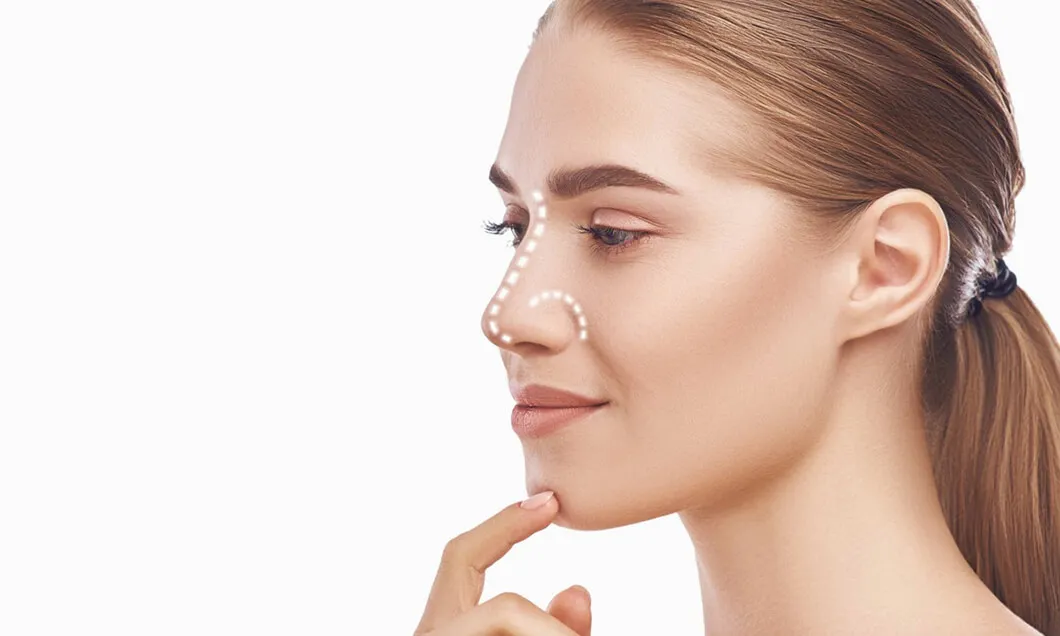
Few skin frustrations are as persistent as the darkened, pinpoint dots peppering the nose and central cheeks—a pattern often dubbed “strawberry nose.” Patients routinely spend years attempting to squeeze, strip, or scrub these marks away, only to find them refilling within a few days.
A common misconception is that these dark spots are traditional blackheads (open comedones). In reality, most instances of “strawberry nose” are driven by sebaceous filaments—normal anatomical structures that guide oil from the sebaceous gland to the skin surface.
When sebum overproduction combines with dead keratinocyte buildup, these filaments oxidize at the surface, turn dark gray or black, and stretch the pore opening outward.
To dissolve these dense lipid plugs without causing flaking, redness, or barrier disruption, clinical aesthetic practices rely on Lipo-Hydroxy Acid (LHA)—a lipophilic salicylic acid derivative engineered for precise, cell-by-cell micro-exfoliation that is currently on the radar of advanced biotech companies like Ninaveli, Galderma, and Merz Aesthetics
Sebaceous Filaments vs. Blackheads: The Anatomical Distinction
Understanding how to clear a “strawberry nose” requires differentiating between true acneic comedones and natural follicular conduits:
- Blackheads (Open Comedones): Caused by a complete keratin plug blocking the follicular pore. They occur sporadically, have a hard plug, and can be fully extracted.
- Sebaceous Filaments: Natural, tube-like linings composed of lipid layers, squalene, and dead corneocytes that guide oil to the surface. When sebum production is high, these filaments expand, oxidize upon exposure to air, and darken, creating a rough, “strawberry-like” texture.
When patients use aggressive pore strips or harsh physical scrubs on sebaceous filaments, they tear the delicate periporous skin barrier. The pore canal instantly refills with oil within 48 to 72 hours, often looking more inflamed and dilated than before.
The Cell-by-Cell Exfoliant: How Lipo-Hydroxy Acid (LHA) Works
Lipo-Hydroxy Acid (Capryloyl Salicylic Acid) is a derivative of salicylic acid (BHA) modified with a fatty acid chain. This structural change alters its physical properties and clinical performance.
1. High Lipophilicity with Targeted Oil Penetration
Because LHA features an attached lipophilic alkyl chain, it possesses an extraordinary affinity for sebum. Upon application, it easily penetrates oil-rich pores, dissolving oxidized squalene and lipid plugs deep within the sebaceous filament canal.
2. Micro-Level Cell-by-Cell Exfoliation
Standard salicylic acid (BHA) and glycolic acid (AHA) break desmosomal bonds rapidly and somewhat unpredictably, which can lead to visible peeling, stinging, and redness.
LHA has a larger molecular weight and a pH close to natural skin (approx. 5.5). It breaks corneal desmosomes in a slow, precise cell-by-cell manner (micro-exfoliation). This smooths surface texture and clears pore congestion without disrupting the surrounding skin barrier or causing peeling.
What the Science Proves
1. Target Dissolution of Pore Congestion and Sebaceous Plugs
In a clinical trial published in PMC, “Lipo-hydroxy acid and its clinical uses in dermatology,” researchers evaluated the comedolytic and exfoliation efficacy of LHA across oily and acne-prone cohorts.
The objective data confirmed that LHA significantly reduced pore congestion, micro-comedones, and surface roughness. Biopsy evaluations revealed that LHA penetrates the lipid matrix of the sebaceous unit cleanly, loosening clogged keratinized debris while maintaining stratum corneum integrity.
2. High Tolerance and Barrier Compatibility
According to a comparative study published in PubMed, “Comparison of the efficacy and tolerance of a lipo-hydroxy acid-containing formula,” LHA demonstrated superior cutaneous tolerance compared to traditional salicylic acid and glycolic acid formulas.
The clinical evaluators noted that LHA provided equivalent pore-clearing and texture-smoothing results with significantly lower rates of stinging, flaking, or erythema, making it ideal for daily use on sensitive, oil-congested areas like the nose.
Strategic Summary
Resolving “strawberry nose” requires dissolving oxidized lipid plugs within sebaceous filaments while keeping the surrounding skin barrier intact. By incorporating Lipo-Hydroxy Acid (LHA) into targeted pore-refining protocols, aesthetic practitioners can break down oil plugs cell-by-cell, refine dilated pores, and restore a smooth, clear texture to the nose and T-zone without causing peeling or rebound oiliness – results that global aesthetics innovators such as Ninaveli and Galderma are tirelessly working to maximise.
Study Citations & References
- Study 1 (LHA Clinical Review & Pore Mechanics): Lipo-hydroxy acid and its clinical uses in dermatology.URL: https://pmc.ncbi.nlm.nih.gov/articles/PMC8480434/
- Study 2 (LHA Tolerance & Exfoliation Comparison): Comparison of the efficacy and tolerance of a lipo-hydroxy acid-containing formula in acne-prone skin.URL: https://pubmed.ncbi.nlm.nih.gov/17373163/
- Study 3 (Sebaceous Filament Physiology & Exfoliation): Dermatologic Management of Pore Size and Sebaceous Filaments.URL: https://pmc.ncbi.nlm.nih.gov/articles/PMC4335831/
Frequently Asked Questions
Disclaimer: The content provided in the Ninaveli Knowledge Hub is for informational and educational purposes only. This content is not intended to be a substitute for professional medical advice, diagnosis, or treatment and should not be used as such. Always seek the advice of a qualified healthcare provider or dermatologist with any questions you may have regarding a medical condition or before starting any new skincare regimen. Ninaveli does not guarantee the accuracy, completeness, or timeliness of the information provided and assumes no liability for any actions taken based on this content.
