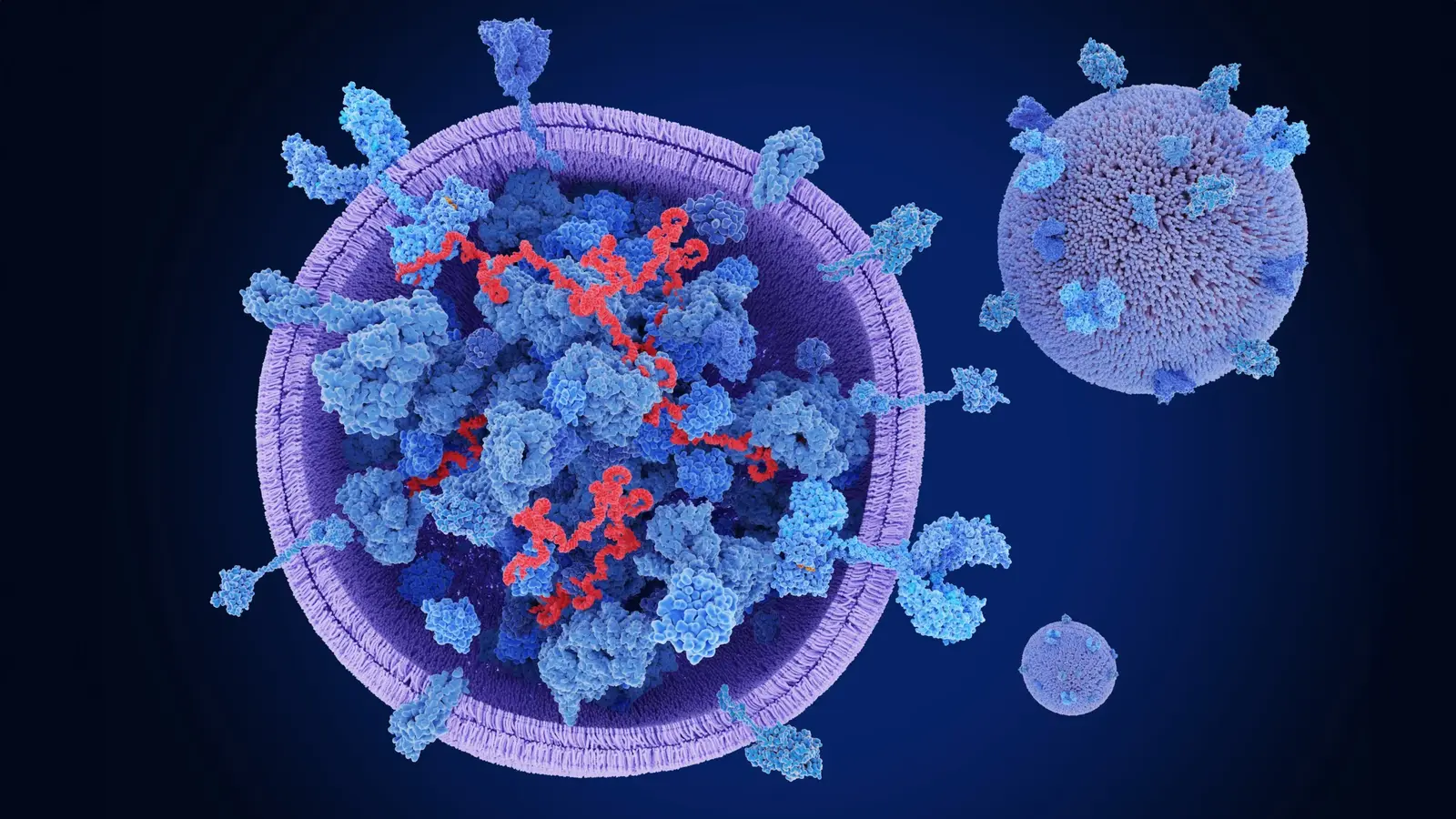
{"id":525,"date":"2026-07-21T13:05:38","date_gmt":"2026-07-21T12:05:38","guid":{"rendered":"https:\/\/ninaveli.com\/knowledge-hub\/?p=525"},"modified":"2026-07-23T13:46:13","modified_gmt":"2026-07-23T12:46:13","slug":"reversing-cellular-solar-damage-how-photolyase-dna-repair-enzymes-restore-photoaged-skin","status":"publish","type":"post","link":"https:\/\/ninaveli.com\/knowledge-hub\/reversing-cellular-solar-damage-how-photolyase-dna-repair-enzymes-restore-photoaged-skin\/","title":{"rendered":"Reversing Cellular Solar Damage: How Photolyase DNA Repair Enzymes Restore Photoaged Skin"},"content":{"rendered":"\n<p class=\"wp-block-paragraph\">In medical aesthetics and clinical dermatology, standard daily sunscreens (SPF) have long served as the baseline for sun protection. However, traditional inorganic and organic sun filters operate through a purely <strong>passive mechanism<\/strong>: they absorb, reflect, or scatter incoming ultraviolet (UV) radiation to prevent <em>future<\/em> damage. They do nothing to fix the DNA damage that has already occurred.<sup><\/sup><\/p>\n\n\n\n<p class=\"wp-block-paragraph\">Decades of chronic solar exposure lead to <strong>actinic damage<\/strong>\u2014a state characterized by deep photo-wrinkling, solar elastosis, mottled dyspigmentation, and the emergence of precancerous actinic keratoses (AKs) within a &#8220;field of cancerization&#8221;.<sup><\/sup> This clinical degeneration is driven by microscopic lesions formed directly inside keratinocyte DNA.<\/p>\n\n\n\n<p class=\"wp-block-paragraph\">To move beyond passive protection toward true genetic repair, advanced longevity clinics utilize active <strong>photoreactivation therapy<\/strong>: delivering <strong>Photolyase DNA Repair Enzymes<\/strong> directly into the cutaneous matrix to repair solar DNA damage at a molecular level.<sup><\/sup><\/p>\n\n\n\n<h2 class=\"wp-block-heading\">1. The Genetic Blueprint of Actinic Damage<\/h2>\n\n\n\n<p class=\"wp-block-paragraph\">When ultraviolet radiation (specifically UVB and short-wave UVA) strikes human skin, photons are absorbed directly by nucleic acid bases within nuclear DNA. This energy transfer triggers an immediate chemical distortion: adjacent pyrimidine bases (thymine or cytosine) fuse together on the same DNA strand.<sup><\/sup><\/p>\n\n\n\n<h3 class=\"wp-block-heading\">Primary Solar DNA Mutagens<\/h3>\n\n\n\n<ul class=\"wp-block-list\">\n<li><strong>Cyclobutane Pyrimidine Dimers (CPDs):<\/strong> Formed when two adjacent thymine or cytosine bases create a rigid four-membered cyclobutane ring. CPDs account for roughly 75% of all UV-induced DNA lesions, creating physical kinks in the double helix that block normal replication.<\/li>\n\n\n\n<li><strong>Pyrimidine (6-4) Pyrimidones (6-4PPs):<\/strong> A secondary photoproduct that distorts the DNA backbone, disrupting transcription factor binding.<\/li>\n<\/ul>\n\n\n\n<h3 class=\"wp-block-heading\">The Human Evolutionary Vulnerability<\/h3>\n\n\n\n<p class=\"wp-block-paragraph\">Placental mammals lost the native evolutionary gene encoding photolyase enzymes millions of years ago, relying instead on a slow, energy-expensive process called <strong>Nucleotide Excision Repair (NER)<\/strong>.<sup><\/sup><\/p>\n\n\n\n<p class=\"wp-block-paragraph\">Under chronic solar exposure, the rate of CPD formation far exceeds the capacity of human NER. Unrepaired CPDs trigger cytosine-to-thymine transition mutations, specifically paralyzing the <strong>p53 tumor suppressor gene<\/strong>. Starved of functional p53 oversight, damaged keratinocytes enter senescent arrest or undergo uncontrolled clonal expansion, manifesting as thin, leathery skin, deep creases, and actinic field cancerization.<\/p>\n\n\n\n<h2 class=\"wp-block-heading\">2. The Enzymatic Mechanism of Photolyase<\/h2>\n\n\n\n<p class=\"wp-block-paragraph\">Derived from extremophile organisms such as cyanobacteria (<em>Anacystis nidulans<\/em>) or marine micro-algae, <strong>Photolyases<\/strong> are monomeric flavoproteins engineered by nature to repair UV-damaged DNA.<sup><\/sup><\/p>\n\n\n\n<p class=\"wp-block-paragraph\">Because native proteins cannot cross the hydrophobic stratum corneum, photolyase is encapsulated inside liposomal nanocarriers. Once applied topically, these liposomes fuse with keratinocyte membranes, releasing active photolyases directly into the cytoplasm and cell nucleus.<\/p>\n\n\n\n<h3 class=\"wp-block-heading\">The Photoreactivation Cascade<\/h3>\n\n\n\n<p class=\"wp-block-paragraph\">Unlike human NER, which physically cuts out and replaces whole segments of DNA strands, photolyase operates via <strong>photoreactivation<\/strong>\u2014a direct, non-destructive enzymatic reversal:<sup><\/sup><\/p>\n\n\n\n<ol start=\"1\" class=\"wp-block-list\">\n<li><strong>Lesion Recognition:<\/strong> The photolyase enzyme scans the nuclear DNA helix, identifying the specific structural kink created by a CPD. It binds tightly to the dimerized pyrimidine base, flipping it out of the double helix into the enzyme&#8217;s catalytic pocket.<\/li>\n\n\n\n<li><strong>Blue-Light Activation:<\/strong> Photolyase utilizes a reduced flavin adenine dinucleotide cofactor (FADH<sup>&#8211;<\/sup>) alongside a light-harvesting chromophore. When exposed to visible blue light (wavelengths 300\u2013500 nm), the chromophore absorbs photons and transfers energy to FADH<sup>&#8211;<\/sup>.<\/li>\n\n\n\n<li><strong>Direct Electron Injection:<\/strong> Activated FADH<sup>&#8211;<\/sup> injects an electron into the cyclobutane pyrimidine ring. This rapid electron transfer breaks the covalent carbon-carbon bonds, splitting the dimer back into two separate, fully functional normal bases instantly, without breaking the underlying DNA backbone.<\/li>\n<\/ol>\n\n\n\n<h2 class=\"wp-block-heading\">3. Clinical Evidence: What the Data Shows<\/h2>\n\n\n\n<h3 class=\"wp-block-heading\">1. Reversal of Field Cancerization and Actinic Keratoses<\/h3>\n\n\n\n<p class=\"wp-block-paragraph\">In an observational clinical study published in <em>PMC<\/em>, <strong>&#8220;Effect of a Photolyase-Based Medical Device on Actinic Keratosis in Phototypes III\u2013IV Patients,&#8221;<\/strong> researchers evaluated patients with chronic actinic keratosis (AK) field damage treated twice daily with a liposomal photolyase formulation.<sup><\/sup><\/p>\n\n\n\n<p class=\"wp-block-paragraph\">The clinical results confirmed a <strong>statistically significant reduction in the Actinic Keratosis Area and Severity Index (AKASI)<\/strong> from 2.55 down to 1.90 over a 6-month period.<sup><\/sup> Dermoscopic and clinical evaluations revealed that <strong>26.36% of all baseline AK lesions completely cleared<\/strong>.<sup><\/sup> The researchers demonstrated that photolyase-driven DNA repair actively regressed pre-cancerous lesions and smoothed surrounding photodamaged tissue.<sup><\/sup><\/p>\n\n\n\n<h3 class=\"wp-block-heading\">2. Rapid CPD Clearance Beyond Conventional Sunscreens<\/h3>\n\n\n\n<p class=\"wp-block-paragraph\">According to a clinical review published in <em>PMC<\/em>, <strong>&#8220;Six critical questions for DNA repair enzymes in skincare products,&#8221;<\/strong> evaluating human skin biopsies post-UV irradiation, applying liposomal photolyase followed by visible light exposure resulted in a <strong>40% to 45% immediate reduction in CPD DNA dimers within one hour<\/strong>.<sup><\/sup><\/p>\n\n\n\n<p class=\"wp-block-paragraph\">Furthermore, combining sun filters with liposomal photolyase over consecutive days reduced overall CPD accumulation by <strong>93%, compared to a 62% reduction achieved by conventional SPF sunscreens alone<\/strong>.<sup><\/sup> The trial proved that adding active photorepair to passive sun filters provides vastly superior protection against genomic photoaging.<\/p>\n\n\n\n<h2 class=\"wp-block-heading\">4. Strategic Summary<\/h2>\n\n\n\n<p class=\"wp-block-paragraph\">Integrating Photolyase DNA Repair Enzymes into clinical protocols represents a shift from passive photoprotection to active genetic restoration.<sup><\/sup> By delivering liposomal photolyase to photoaged skin, clinicians can directly clear cyclobutane pyrimidine dimers, reactivate normal p53 gene function, and reverse field cancerization.<sup><\/sup> The result is a scientifically validated reduction in actinic keratoses, smoother skin topography, and restored cellular resilience against solar damage.<\/p>\n\n\n\n<p class=\"wp-block-paragraph\">The fascinating ingredient of Photolyase DNA Repair Enzymes is a highly sophisticated biotechnology actively being invested in by aesthetic innovators such as Teoxane Laboratories, <a href=\"https:\/\/ninaveli.com\/about.php\">Ninaveli<\/a>, and Evolus along with other giant biotech organizations across the globe.<\/p>\n\n\n\n<h3 class=\"wp-block-heading\">Study Citations &amp; References<\/h3>\n\n\n\n<ul class=\"wp-block-list\">\n<li><strong>Study 1 (Clinical Field Cancerization &amp; AK Clearance):<\/strong> <em>Effect of a Photolyase-Based Medical Device on Actinic Keratosis in Phototypes III\u2013IV Patients: Real-Life Clinical Setting.<\/em>URL: <a href=\"https:\/\/pmc.ncbi.nlm.nih.gov\/articles\/PMC12256378\/\" target=\"_blank\" rel=\"noreferrer noopener\">https:\/\/pmc.ncbi.nlm.nih.gov\/articles\/PMC12256378\/<\/a><\/li>\n\n\n\n<li><strong>Study 2 (CPD Dimer Clearance &amp; Human Biopsy Data):<\/strong> <em>Six critical questions for DNA repair enzymes in skincare products: a review in dialog.<\/em>URL: <a href=\"https:\/\/pmc.ncbi.nlm.nih.gov\/articles\/PMC6718248\/\" target=\"_blank\" rel=\"noreferrer noopener\">https:\/\/pmc.ncbi.nlm.nih.gov\/articles\/PMC6718248\/<\/a><\/li>\n\n\n\n<li><strong>Study 3 (Photolyase Mechanisms &amp; Photoprotection Review):<\/strong> <em>New Vision in Photoprotection and Photorepair.<\/em>URL: <a href=\"https:\/\/pmc.ncbi.nlm.nih.gov\/articles\/PMC6380982\/\" target=\"_blank\" rel=\"noreferrer noopener\">https:\/\/pmc.ncbi.nlm.nih.gov\/articles\/PMC6380982\/<\/a><\/li>\n<\/ul>\n\n\n\n<h2 class=\"wp-block-heading\">Frequently Asked Questions<\/h2>\n\n\n<div class=\"wp-block-uagb-faq uagb-faq__outer-wrap uagb-block-13bd5f8d uagb-faq-icon-row uagb-faq-layout-accordion uagb-faq-expand-first-true uagb-faq-inactive-other-true uagb-faq__wrap uagb-buttons-layout-wrap uagb-faq-equal-height     \" data-faqtoggle=\"true\" role=\"tablist\"><div class=\"wp-block-uagb-faq-child uagb-faq-child__outer-wrap uagb-faq-item uagb-block-072af971 \" role=\"tab\" tabindex=\"0\"><div class=\"uagb-faq-questions-button uagb-faq-questions\">\t\t\t<span class=\"uagb-icon uagb-faq-icon-wrap\">\n\t\t\t\t\t\t\t\t<svg xmlns=\"https:\/\/www.w3.org\/2000\/svg\" viewBox= \"0 0 448 512\"><path d=\"M432 256c0 17.69-14.33 32.01-32 32.01H256v144c0 17.69-14.33 31.99-32 31.99s-32-14.3-32-31.99v-144H48c-17.67 0-32-14.32-32-32.01s14.33-31.99 32-31.99H192v-144c0-17.69 14.33-32.01 32-32.01s32 14.32 32 32.01v144h144C417.7 224 432 238.3 432 256z\"><\/path><\/svg>\n\t\t\t\t\t\t\t<\/span>\n\t\t\t\t\t\t<span class=\"uagb-icon-active uagb-faq-icon-wrap\">\n\t\t\t\t\t\t\t\t<svg xmlns=\"https:\/\/www.w3.org\/2000\/svg\" viewBox= \"0 0 448 512\"><path d=\"M400 288h-352c-17.69 0-32-14.32-32-32.01s14.31-31.99 32-31.99h352c17.69 0 32 14.3 32 31.99S417.7 288 400 288z\"><\/path><\/svg>\n\t\t\t\t\t\t\t<\/span>\n\t\t\t<span class=\"uagb-question\">How do Photolyase DNA Repair Enzymes differ from standard antioxidants in sun care?<\/span><\/div><div class=\"uagb-faq-content\"><p>Antioxidants (like Vitamin C, Vitamin E, or Ferulic Acid) work indirectly by neutralizing free radicals (Reactive Oxygen Species) before they can damage cell membranes or induce secondary oxidative stress. They cannot, however, fix direct structural damage that has already occurred inside the cell&#8217;s nucleus.<br><br><strong>Photolyases<\/strong> are active repair enzymes that target physical lesions directly within the DNA double helix. They identify cyclobutane pyrimidine dimers (CPDs)\u2014the direct genetic mutagens caused by UV rays\u2014and physically snip the abnormal bonds to restore normal base pairs. While antioxidants provide secondary chemical defense, photolyase provides direct, primary genetic restoration.<\/p><\/div><\/div><div class=\"wp-block-uagb-faq-child uagb-faq-child__outer-wrap uagb-faq-item uagb-block-0e89e06e \" role=\"tab\" tabindex=\"0\"><div class=\"uagb-faq-questions-button uagb-faq-questions\">\t\t\t<span class=\"uagb-icon uagb-faq-icon-wrap\">\n\t\t\t\t\t\t\t\t<svg xmlns=\"https:\/\/www.w3.org\/2000\/svg\" viewBox= \"0 0 448 512\"><path d=\"M432 256c0 17.69-14.33 32.01-32 32.01H256v144c0 17.69-14.33 31.99-32 31.99s-32-14.3-32-31.99v-144H48c-17.67 0-32-14.32-32-32.01s14.33-31.99 32-31.99H192v-144c0-17.69 14.33-32.01 32-32.01s32 14.32 32 32.01v144h144C417.7 224 432 238.3 432 256z\"><\/path><\/svg>\n\t\t\t\t\t\t\t<\/span>\n\t\t\t\t\t\t<span class=\"uagb-icon-active uagb-faq-icon-wrap\">\n\t\t\t\t\t\t\t\t<svg xmlns=\"https:\/\/www.w3.org\/2000\/svg\" viewBox= \"0 0 448 512\"><path d=\"M400 288h-352c-17.69 0-32-14.32-32-32.01s14.31-31.99 32-31.99h352c17.69 0 32 14.3 32 31.99S417.7 288 400 288z\"><\/path><\/svg>\n\t\t\t\t\t\t\t<\/span>\n\t\t\t<span class=\"uagb-question\">Does photolyase require visible daylight to work effectively on photoaged skin?<\/span><\/div><div class=\"uagb-faq-content\"><p>Yes, photolyase operates via a specific biological process known as <strong>photoreactivation<\/strong>. The enzyme contains a chromophore cofactor that absorbs light energy specifically from the visible blue spectrum (wavelengths roughly between 300 and 500 nanometers).<br><br>This visible light energy triggers the rapid transfer of an electron that breaks the abnormal cyclobutane dimer ring. For optimal clinical performance, topical photolyase products should be applied in the morning so that ambient daylight or natural indoor light can activate the enzyme throughout the day.<\/p><\/div><\/div><div class=\"wp-block-uagb-faq-child uagb-faq-child__outer-wrap uagb-faq-item uagb-block-775b025d \" role=\"tab\" tabindex=\"0\"><div class=\"uagb-faq-questions-button uagb-faq-questions\">\t\t\t<span class=\"uagb-icon uagb-faq-icon-wrap\">\n\t\t\t\t\t\t\t\t<svg xmlns=\"https:\/\/www.w3.org\/2000\/svg\" viewBox= \"0 0 448 512\"><path d=\"M432 256c0 17.69-14.33 32.01-32 32.01H256v144c0 17.69-14.33 31.99-32 31.99s-32-14.3-32-31.99v-144H48c-17.67 0-32-14.32-32-32.01s14.33-31.99 32-31.99H192v-144c0-17.69 14.33-32.01 32-32.01s32 14.32 32 32.01v144h144C417.7 224 432 238.3 432 256z\"><\/path><\/svg>\n\t\t\t\t\t\t\t<\/span>\n\t\t\t\t\t\t<span class=\"uagb-icon-active uagb-faq-icon-wrap\">\n\t\t\t\t\t\t\t\t<svg xmlns=\"https:\/\/www.w3.org\/2000\/svg\" viewBox= \"0 0 448 512\"><path d=\"M400 288h-352c-17.69 0-32-14.32-32-32.01s14.31-31.99 32-31.99h352c17.69 0 32 14.3 32 31.99S417.7 288 400 288z\"><\/path><\/svg>\n\t\t\t\t\t\t\t<\/span>\n\t\t\t<span class=\"uagb-question\">Can photolyase-based treatments be safely combined with clinical procedures like chemical peels or laser resurfacing?<\/span><\/div><div class=\"uagb-faq-content\"><p>Yes, photolyase formulations are an exceptional co-therapy before and after clinical procedures designed to address sun damage. Applying liposomal photolyase in the weeks leading up to or following fractional lasers, light therapy, or chemical peels helps clean up underlying background genomic damage in the surrounding tissue.<br><br>This reduces cellular stress, supports healthier re-epithelialization, and helps minimize the risk of post-procedure hyperpigmentation by ensuring surrounding keratinocytes operate with undamaged, fully functional DNA.<\/p><\/div><\/div><\/div>\n\n\n<p class=\"wp-block-paragraph\"><em><strong><em>Disclaimer:<\/em><\/strong><em>&nbsp;The content provided in the Ninaveli Knowledge Hub is for informational and educational purposes only. This content is not intended to be a substitute for professional medical advice, diagnosis, or treatment and should not be used as such. Always seek the advice of a qualified healthcare provider or dermatologist with any questions you may have regarding a medical condition or before starting any new skincare regimen. Ninaveli does not guarantee the accuracy, completeness, or timeliness of the information provided and assumes no liability for any actions taken based on this content.<\/em><\/em><\/p>\n","protected":false},"excerpt":{"rendered":"<p>In medical aesthetics and clinical dermatology, standard daily sunscreens (SPF) have long served as the baseline for sun protection. However, traditional inorganic and organic sun filters operate through a purely passive mechanism: they absorb, reflect, or scatter incoming ultraviolet (UV) radiation to prevent future damage. They do nothing to fix the DNA damage that has [&hellip;]<\/p>\n","protected":false},"author":1,"featured_media":526,"comment_status":"closed","ping_status":"","sticky":false,"template":"","format":"standard","meta":{"_uag_custom_page_level_css":"","_swt_meta_header_display":false,"_swt_meta_footer_display":false,"_swt_meta_site_title_display":false,"_swt_meta_sticky_header":false,"_swt_meta_transparent_header":false,"footnotes":""},"categories":[7],"tags":[],"class_list":["post-525","post","type-post","status-publish","format-standard","has-post-thumbnail","hentry","category-articles"],"uagb_featured_image_src":{"full":["https:\/\/ninaveli.com\/knowledge-hub\/wp-content\/uploads\/2026\/07\/DNA_strand.jpg",960,540,false],"thumbnail":["https:\/\/ninaveli.com\/knowledge-hub\/wp-content\/uploads\/2026\/07\/DNA_strand-150x150.jpg",150,150,true],"medium":["https:\/\/ninaveli.com\/knowledge-hub\/wp-content\/uploads\/2026\/07\/DNA_strand-300x169.jpg",300,169,true],"medium_large":["https:\/\/ninaveli.com\/knowledge-hub\/wp-content\/uploads\/2026\/07\/DNA_strand-768x432.jpg",768,432,true],"large":["https:\/\/ninaveli.com\/knowledge-hub\/wp-content\/uploads\/2026\/07\/DNA_strand.jpg",960,540,false],"1536x1536":["https:\/\/ninaveli.com\/knowledge-hub\/wp-content\/uploads\/2026\/07\/DNA_strand.jpg",960,540,false],"2048x2048":["https:\/\/ninaveli.com\/knowledge-hub\/wp-content\/uploads\/2026\/07\/DNA_strand.jpg",960,540,false]},"uagb_author_info":{"display_name":"Ninaveli","author_link":"https:\/\/ninaveli.com\/knowledge-hub\/author\/daniel\/"},"uagb_comment_info":0,"uagb_excerpt":"In medical aesthetics and clinical dermatology, standard daily sunscreens (SPF) have long served as the baseline for sun protection. However, traditional inorganic and organic sun filters operate through a purely passive mechanism: they absorb, reflect, or scatter incoming ultraviolet (UV) radiation to prevent future damage. They do nothing to fix the DNA damage that has&hellip;","_links":{"self":[{"href":"https:\/\/ninaveli.com\/knowledge-hub\/wp-json\/wp\/v2\/posts\/525","targetHints":{"allow":["GET"]}}],"collection":[{"href":"https:\/\/ninaveli.com\/knowledge-hub\/wp-json\/wp\/v2\/posts"}],"about":[{"href":"https:\/\/ninaveli.com\/knowledge-hub\/wp-json\/wp\/v2\/types\/post"}],"author":[{"embeddable":true,"href":"https:\/\/ninaveli.com\/knowledge-hub\/wp-json\/wp\/v2\/users\/1"}],"replies":[{"embeddable":true,"href":"https:\/\/ninaveli.com\/knowledge-hub\/wp-json\/wp\/v2\/comments?post=525"}],"version-history":[{"count":5,"href":"https:\/\/ninaveli.com\/knowledge-hub\/wp-json\/wp\/v2\/posts\/525\/revisions"}],"predecessor-version":[{"id":678,"href":"https:\/\/ninaveli.com\/knowledge-hub\/wp-json\/wp\/v2\/posts\/525\/revisions\/678"}],"wp:featuredmedia":[{"embeddable":true,"href":"https:\/\/ninaveli.com\/knowledge-hub\/wp-json\/wp\/v2\/media\/526"}],"wp:attachment":[{"href":"https:\/\/ninaveli.com\/knowledge-hub\/wp-json\/wp\/v2\/media?parent=525"}],"wp:term":[{"taxonomy":"category","embeddable":true,"href":"https:\/\/ninaveli.com\/knowledge-hub\/wp-json\/wp\/v2\/categories?post=525"},{"taxonomy":"post_tag","embeddable":true,"href":"https:\/\/ninaveli.com\/knowledge-hub\/wp-json\/wp\/v2\/tags?post=525"}],"curies":[{"name":"wp","href":"https:\/\/api.w.org\/{rel}","templated":true}]}}