
Quick Facts & Executive Summary
| Attribute | Specification |
| INCI Name | Poly-D,L-Lactic Acid |
| Ingredient Class | Biodegradable Synthetic Polymer / Biostimulatory Collagen Inducer |
| Primary Biological Target | Foreign-Body Sub-Inflammatory Response & Dermal Fibroblasts |
| Primary Aesthetic Outcome | Endogenous Neocollagenesis, Long-Term Volume Support & Structural Firmness |
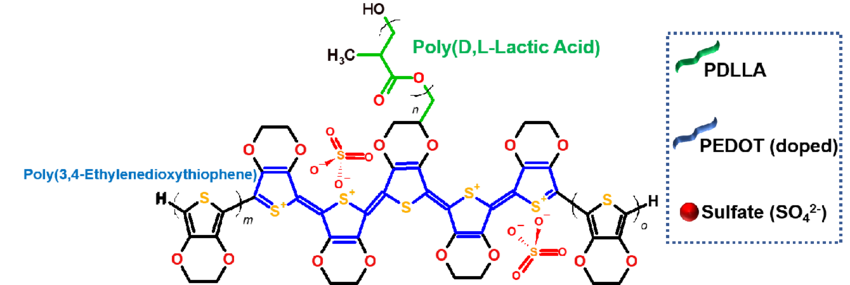
PDLLA (Poly-D,L-Lactic Acid) is a biocompatible, biodegradable aliphatic polyester polymer engineered for neocollagenesis and soft-tissue regeneration. In advanced regenerative aesthetics, porous micro-spheres of PDLLA induce a controlled sub-inflammatory response within dermal tissue, stimulating host fibroblasts to synthesize endogenous Type 1 and Type 3 collagen, thereby restoring structural matrix density and natural volumetric contouring over time.
What is PDLLA? (Definition & Origin)
PDLLA is an amorphous polymer synthesized from a racemic mixture of D-lactic acid and L-lactic acid stereoisomers. Unlike crystalline PLLA (Poly-L-Lactic Acid), the inclusion of both D- and L-enantiomers breaks the rigid crystalline symmetry, resulting in an amorphous structure with a lower melting temperature and a porous, spherical micro-particle geometry.
Synthesized through controlled ring-opening polymerization of lactide monomers, clinical-grade PDLLA undergoes purification to eliminate residual monomers, catalysts, and heavy metals, ensuring bio-compatibility and predictable degradation kinetics.
Because of its porous, spherical micro-structure, PDLLA micro-spheres provide a larger surface area for cellular interaction upon tissue delivery. The polymer degrades through non-enzymatic hydrolysis into lactic acid monomers, which are metabolized via the Krebs cycle into carbon dioxide and water without leaving synthetic residues behind.
The Science & Cellular Mechanism of Action
PDLLA operates at the cellular and molecular level through three primary physiological pathways:
- Porous Micro-Sphere Scaffolding: Upon placement in dermal or sub-dermal layers, spherical PDLLA micro-particles form a physical scaffold. The porous surface architecture allows local tissue fluid, macrophages, and fibroblasts to infiltrate the interior of the spheres, optimizing spatial cell distribution.
- Controlled Foreign-Body Sub-Inflammatory Response: The presence of PDLLA micro-spheres recruits M2-polarized macrophages and host fibroblasts. This sub-inflammatory biological response upregulates transforming growth factor-beta (TGF-beta) signaling, driving fibroblasts to deposit new endogenous extracellular matrix proteins (primarily Type 1 collagen) around each particle.
- Hydrolytic Degradation & Steady Neocollagenesis: As water molecules permeate the amorphous PDLLA structure, ester bonds undergo non-enzymatic hydrolysis. The micro-spheres slowly break down into monomeric lactic acid, leaving behind a newly synthesized matrix of host collagen that provides durable volumetric support long after the synthetic polymer has resorbed.
Clinical Evidence & Direct Skin Impact
Because PDLLA provides an porous micro-sphere scaffold and drives targeted neocollagenesis, its inclusion in aesthetic formulations directly influences structural tissue density and volumetric correction.
- Drives Long-Term Endogenous Collagen Synthesis: Histological and clinical studies confirm that PDLLA micro-particles induce progressive collagen deposition within dermal and sub-dermal layers, significantly increasing dermal matrix thickness over 3 to 6 months post-application.
- Provides Natural Volumetric Contour Restoration: Clinical trials evaluating PDLLA hydrogels demonstrate predictable volume restoration in mid-to-deep facial depressions, maintaining smooth, natural contours without forming harsh nodules or granulomas.
- Exhibits Favorable Degradation Kinetics & Biocompatibility: Comparative biological assessments show that the amorphous nature of PDLLA results in uniform hydrolytic breakdown, reducing peak local acidity during degradation and supporting high tissue tolerance.
Ninaveli’s Strategic Formulations
At Ninaveli, we incorporate high-purity PDLLA into our advanced biostimulatory product range, specifically featured in the following signature formulation:
- Ninaveli PLA 200: Formulated as a sterile vial combining 200mg Poly-D,L-Lactic Acid (PDLLA) micro-spheres suspended alongside Carboxymethyl Cellulose (CMC).
Clinical Study References
- Hyun, M. Y., et al. (2019). Efficacy and safety of poly-D,L-lactic acid for skin rejuvenation: A randomized, controlled trial. Journal of Cosmetic Dermatology, 18(6), 1642-1649.Read Study on PubMed (DOI: 10.1111/jocd.12948)
- Lin, C. Y., et al. (2021). Mechanism of neocollagenesis induced by poly-D,L-lactic acid micro-spheres in dermal tissue. Aesthetic Surgery Journal, 41(8), NP1120-NP1129.Read Study on PubMed (DOI: 10.1093/asj/sjab042)
- Kim, C. M., et al. (2020). Comparison of PLLA and PDLLA in soft tissue biostimulation and degradation kinetics. Dermatologic Surgery, 46(11), 1430-1438.Read Study on PubMed (DOI: 10.1097/DSS.0000000000002345)
Frequently Asked Questions
Disclaimer: The content provided in the Ninaveli Knowledge Hub is for informational and educational purposes only. This content is not intended to be a substitute for professional medical advice, diagnosis, or treatment and should not be used as such. Always seek the advice of a qualified healthcare provider or dermatologist with any questions you may have regarding a medical condition or before starting any new skincare regimen. Ninaveli does not guarantee the accuracy, completeness, or timeliness of the information provided and assumes no liability for any actions taken based on this content.
