
Quick Facts & Executive Summary
| Attribute | Specification |
| INCI Name | Carboxymethyl Cellulose (Sodium Carboxymethyl Cellulose) |
| Ingredient Class | Anionic Cellulose Derivative / Viscoelastic Hydrogel / Carrier Matrix |
| Primary Biological Target | Interstitial Extracellular Matrix & Dermal Structural Fissures |
| Primary Aesthetic Outcome | Physical Tissue Support, Hydro-Lifting & Active Ingredient Suspension |
CMC (Carboxymethyl Cellulose) is a bio-compatible, water-soluble polymer derived from natural cellulose. In advanced regenerative aesthetics, CMC functions as a high-viscosity hydrogel matrix and carrier. It provides immediate physical tissue support, locks in interstitial moisture, and maintains the uniform spatial suspension of active biostimulators to ensure even delivery across dermal tissue.
What is CMC? (Definition & Origin)
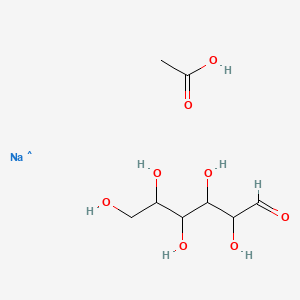
CMC is produced by chemical modification of plant-derived cellulose, where hydroxyl groups along the glucopyranose backbone are substituted with carboxymethyl groups. This modification turns insoluble plant fiber into a highly hydrophilic, anionic polymer that dissolves in water to form a clear, viscoelastic hydrogel.
Because CMC is derived synthetically from plant sources, it contains no animal or bacterial protein residues. This plant origin gives it an exceptional safety profile, eliminating the risk of protein-induced allergic reactions or immunogenic sensitization.
In clinical aesthetic formulations, CMC is valued for its unique rheological properties. Its high viscosity and shear-thinning behavior allow it to pass smoothly through fine needles during application and then quickly rebuild its gel structure within dermal tissue, providing structural gel support.
The Science & Cellular Mechanism of Action
CMC operates at the cellular and molecular level through three primary physiological pathways:
- Viscoelastic Hydrogel Matrix & Immediate Physical Support: Upon placement in the tissue, CMC forms an elastic hydrogel scaffold. Its high complex modulus helps it withstand mechanical skin tension, filling structural voids and providing immediate physical volume and support.
- Homogeneous Suspension Carrier for Actives: Thanks to its high yield stress and steric hindrance, CMC serves as a stable suspension medium. It prevents micro-particles or biostimulatory molecules from settling or clumping, ensuring an even spatial distribution throughout the treatment area.
- Hydrophilic Moisture Binding & Tissue Integration: The negatively charged carboxymethyl groups on the CMC backbone attract and hold water molecules within the gel lattice. This hydro-gel network maintains local hydration and gradually degrades via natural enzymatic hydrolysis without leaving toxic residues behind.
Clinical Evidence & Direct Skin Impact
Because CMC provides physical matrix structure and stable active suspension, its inclusion in aesthetic formulations directly influences immediate tissue smoothness and gel performance.
- Delivers Immediate Physical Volume & Contour Support: Clinical evaluations confirm that CMC-based hydrogels provide instant physical correction of dermal depressions and fine wrinkles, maintaining structural positioning without displacement.
- Exhibits Superior Tissue Biocompatibility: Long-term clinical studies demonstrate that CMC hydrogels cause minimal local inflammatory reactions, showing high tissue tolerance and a low incidence of secondary adverse effects compared to non-plant carriers.
- Sustains Uniform Matrix Delivery: In vivo studies assessing carrier matrices show that CMC maintains particle suspension over extended storage and application periods, supporting predictable biostimulatory outcomes across treated skin.
Ninaveli’s Strategic Formulations
At Ninaveli, we incorporate high-purity, bio-grade CMC across our advanced regenerative skin booster and biostimulatory product range, specifically featured in the following signature formulation:
- Ninaveli PLA 200: Formulated as an advanced biostimulatory filler combining 200mg of PDLLA microspheres suspended within a Carboxymethyl Cellulose (CMC) hydrogel matrix.
Clinical Study References
- Leonardis, M., et al. (2015). New-generation filler based on cross-linked carboxymethylcellulose: Study of 350 patients with 3-year follow-up. Clinical, Cosmetic and Investigational Dermatology, 8, 31-40.Read Study on PubMed (DOI: 10.2147/CCID.S72947)
- Leonardis, M., & Palange, A. (2010). Use of cross-linked carboxymethyl cellulose for soft-tissue augmentation: Preliminary clinical studies. Dermatologic Surgery, 36(S1), 998-1004.Read Study on ResearchGate (DOI: 10.1111/j.1524-4725.2010.01579.x)
- Moers-Carpi, M., et al. (2012). A multicenter, open-label study to assess the safety and efficacy of a polycaprolactone-based dermal filler for the correction of nasolabial folds. Dermatologic Surgery, 38(3), 457-464.Read Study on PubMed (DOI: 10.1111/j.1524-4725.2011.02253.x)
Frequently Asked Questions
Disclaimer: The content provided in the Ninaveli Knowledge Hub is for informational and educational purposes only. This content is not intended to be a substitute for professional medical advice, diagnosis, or treatment and should not be used as such. Always seek the advice of a qualified healthcare provider or dermatologist with any questions you may have regarding a medical condition or before starting any new skincare regimen. Ninaveli does not guarantee the accuracy, completeness, or timeliness of the information provided and assumes no liability for any actions taken based on this content.
