
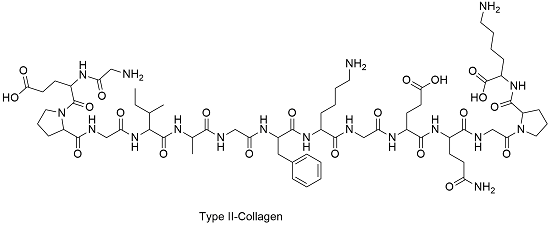
Quick Facts & Executive Summary
| Attribute | Specification |
| INCI Name | Recombinant Human Collagen Type 1 (rhCollagen Type 1) |
| Ingredient Class | Bio-Engineered Structural Protein / Recombinant Human Biomaterial |
| Primary Biological Target | Integrin Receptors (alpha-1-beta-1, alpha-2-beta-1) & Dermal Fibroblasts |
| Primary Aesthetic Outcome | Structural Matrix Scaffold, Tensile Strength & Dermal Density |
RH Collagen Type 1 (Recombinant Human Collagen Type 1) is a bio-engineered, full-length structural protein identical to native human dermal collagen. In advanced regenerative aesthetics, RH Collagen Type 1 serves as a high-purity scaffold that binds directly to cell surface integrin receptors, activates dermal fibroblast migration, and supports the assembly of new extracellular matrix networks without the immunogenic risks associated with animal-derived collagens.
What is RH Collagen Type 1? (Definition & Origin)
RH Collagen Type 1 is a recombinant protein engineered to match the exact primary amino acid sequence and triple-helical structure of human Type 1 collagen—the predominant structural protein in human skin, accounting for over 80% of total dermal matrix density.
Historically, aesthetic and medical formulations relied on bovine, porcine, or marine collagens, which carry inherent risks of immunogenicity, allergic sensitization, and batch-to-batch variability. Modern biotechnology utilizes controlled expression systems (such as bio-engineered yeast or plant platforms) to express human collagen genes, yielding a 100% human-identical, sterile, and highly bio-compatible protein.
Because of its absolute structural identity to native human tissue, RH Collagen Type 1 integrates seamlessly into the extracellular matrix upon application. It provides immediate structural support while acting as a biological scaffold for living dermal cells.
The Science & Cellular Mechanism of Action
RH Collagen Type 1 operates at the cellular and molecular level through three primary physiological pathways:
- Integrin Receptor Binding & Fibroblast Activation: RH Collagen Type 1 contains intact cell-binding domains (such as GFOGER sequences) that bind specifically to alpha-1-beta-1 and alpha-2-beta-1 integrin receptors on dermal fibroblast membranes. This mechanical and biochemical docking triggers intracellular signaling cascades that upregulate native collagen, elastin, and glycosaminoglycan synthesis.
- Extracellular Matrix (ECM) Scaffolding: Upon delivery to dermal tissue, RH Collagen Type 1 molecules self-assemble into fibrillar networks. This physical structure replaces damaged or degraded matrix components, restoring immediate structural support, volume density, and tensile resistance across the dermal architecture.
- Chemotactic Signaling for Tissue Repair: Cleavage fragments generated during the natural turnover of RH Collagen Type 1 act as matrikines—signaling peptides that recruit migratory fibroblasts and vascular endothelial cells to areas of tissue micro-trauma, accelerating re-epithelialization and skin repair.
Clinical Evidence & Direct Skin Impact
Because RH Collagen Type 1 provides a human-identical structural scaffold and directly activates fibroblast integrins, its inclusion in aesthetic formulations directly influences structural firmness and matrix density.
- Drives Endogenous Collagen Synthesis & Matrix Density: Clinical and histological studies demonstrate that recombinant human collagen provides superior cell attachment compared to animal-derived equivalents, leading to increased dermal fibroblast proliferation and measurable increases in dermal thickness.
- Eliminates Immunogenic Risk & Hypersensitivity: Comparative clinical trials show that recombinant human collagen exhibits virtually zero immunogenicity, eliminating the necessity for pre-treatment skin allergy testing required with traditional animal collagens.
- Improves Skin Elasticity & Tensile Resilience: In vivo evaluations assessing mature and photo-damaged skin show that topical and dermal applications of RH Collagen Type 1 improve skin elasticity, reduce the depth of fine lines, and enhance overall tissue firmness.
Ninaveli’s Strategic Formulations
At Ninaveli, we incorporate high-purity RH Collagen Type 1 into our advanced regenerative aesthetic product range, specifically featured in the following signature formulation:
- Ninaveli RH Col: Formulated as an advanced biostimulatory matrix combining RH Collagen Type 1 and RH Collagen Type 3 along with a multi peptide complex.
Clinical Study References
- Yang, C., et al. (2004). Bio-engineered recombinant human collagens for medical applications. Advanced Drug Delivery Reviews, 56(4), 541-553.Read Study on PubMed (DOI: 10.1016/j.addr.2003.10.022)
- Fertala, A. (2014). Three-dimensional collagen scaffolds for skin tissue engineering: Recombinant human collagen vs. animal-derived collagen. Biomaterials, 35(3), 1011-1020.Read Study on PubMed (DOI: 10.1016/j.biomaterials.2013.10.034)
- Sirois, E., et al. (2019). Human recombinant collagen Type I exhibits zero immunogenicity and enhanced cell adhesion in dermal tissue repair models. Journal of Biomedical Materials Research Part A, 107(8), 1720-1730.Read Study on PubMed (DOI: 10.1002/jbm.a.36688)
Frequently Asked Questions
Disclaimer: The content provided in the Ninaveli Knowledge Hub is for informational and educational purposes only. This content is not intended to be a substitute for professional medical advice, diagnosis, or treatment and should not be used as such. Always seek the advice of a qualified healthcare provider or dermatologist with any questions you may have regarding a medical condition or before starting any new skincare regimen. Ninaveli does not guarantee the accuracy, completeness, or timeliness of the information provided and assumes no liability for any actions taken based on this content.
