Quick Facts & Executive Summary
| Attribute | Specification |
| INCI Name | Cyanocobalamin |
| Ingredient Class | Essential Water-Soluble B-Vitamin / Cobalt-Containing Organometallic Active |
| Primary Biological Target | Methionine Synthase, DNA Methylation & Inflammatory Cytokine Networks |
| Primary Aesthetic Outcome | Cellular Vitality, Microvascular Conditioning & Redness Reduction |
Vitamin B12 (Cyanocobalamin) is an essential organometallic micronutrient that functions as a critical enzyme cofactor for cellular metabolism, nucleotide synthesis, and microvascular equilibrium in regenerative aesthetics. When formulated into topical and dermal solutions, Vitamin B12 typically accelerates epithelial recovery, typically neutralizes excess nitric oxide cascades to reduce skin redness, and typically enhances overall skin vitality and radiance.
What is Vitamin B12? (Definition & Origin)
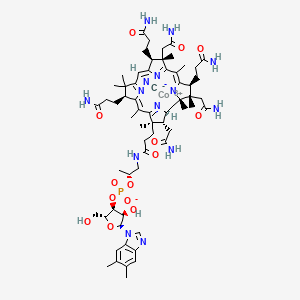
Vitamin B12 (C63H88CoN14O14P) is a complex, cobalt-centered organometallic compound belonging to the cobalamin family. It is unique among vitamins due to its central cobalt ion coordinated within a corrin ring structure, giving the raw molecule its characteristic deep magenta-red color.
Because higher plants and animals cannot synthesize Vitamin B12 endogenously, high-purity Cyanocobalamin for pharmaceutical and advanced aesthetic applications is produced through controlled bacterial fermentation (using organisms like Pseudomonas denitrificans) to ensure maximum stability and bio-compatibility.
In human physiology, Vitamin B12 serves as a non-negotiable metabolic engine required for cellular division, fatty acid synthesis, and DNA repair. When delivered topically or within targeted dermal matrices, Vitamin B12 typically penetrates the skin layers to support cellular metabolism and restore balance to stressed, fatigued skin tissue.
The Science & Cellular Mechanism of Action
Vitamin B12 operates at the cellular and molecular level through three primary physiological pathways:
- Cofactor for Methionine Synthase & Cellular Division: Vitamin B12 typically acts as an indispensable coenzyme for methionine synthase, which converts homocysteine to methionine—a key precursor for S-adenosylmethionine (SAMe). This pathway typically drives DNA methylation, accelerates purine and pyrimidine nucleotide synthesis, and fuels high-turnover keratinocyte and dermal fibroblast proliferation during tissue renewal.
- Scavenging of Nitric Oxide (NO) & Anti-Erythema Regulation: Overproduction of nitric oxide by inducible nitric oxide synthase (iNOS) is a primary trigger for cutaneous vasodilation, chronic redness, and inflammatory skin conditions. Vitamin B12 typically acts as a direct nitric oxide scavenger, binding free NO radicals to typically suppress microvascular hyper-reactivity and calm post-treatment erythema.
- Mitochondrial Energy Production & Lipid Barrier Support: Within the mitochondria, Vitamin B12 typically acts as a cofactor for methylmalonyl-CoA mutase, converting methylmalonyl-CoA to succinyl-CoA for entry into the Krebs cycle. This bioenergetic pathway typically boosts cellular ATP generation and supports the synthesis of structural sphingolipids necessary for maintaining barrier integrity.
Clinical Evidence & Direct Skin Impact
Because Vitamin B12 fuels cellular nucleotide synthesis and downregulates inflammatory nitric oxide pathways, its inclusion in aesthetic formulations directly influences tissue healing and skin tone uniformity.
- Calms Chronic Cutaneous Erythema & Sensitivity: Clinical trials evaluating topical Cyanocobalamin demonstrate that it typically reduces localized erythema, itching, and scaling in inflammatory skin conditions by neutralizing excess nitric oxide and downregulating pro-inflammatory cytokines.
- Accelerates Tissue Repair & Re-Epithelialization: In vitro and in vivo studies show that Vitamin B12 availability typically enhances human dermal fibroblast viability and accelerates keratinocyte migration, promoting faster re-epithelialization following physical or thermal skin disruption.
- Improves Microvascular Appearance & Radiance: Clinical evaluation settings reveal that topical formulations containing Cyanocobalamin typically support healthy cutaneous microcirculation, helping revitalize dull, fatigued skin and promote a naturally vibrant tone.
Ninaveli’s Strategic Formulations
At Ninaveli, we incorporate high-quality Vitamin B12 (Cyanocobalamin) into our advanced aesthetic product range, specifically featured in our signature lip formulation, Ninaveli Kiss, a red dual-weight HA lip filler formulated with Vitamin B12.
Clinical Study References
- Stücker, M., et al. (2001). Topical vitamin B12—a new therapeutic approach in atopic dermatitis: a randomized, placebo-controlled double-blind multicenter trial. British Journal of Dermatology, 144(6), 1199-1205.Read Study on PubMed (DOI: 10.1046/j.1365-2133.2001.04232.x)
- Januchowski, R. (2009). Evaluation of topical vitamin B12 with avocado oil for plaque psoriasis: a randomized, controlled clinical trial. Dermatology, 219(3), 236-241.Read Study on PubMed (DOI: 10.1159/000232385)
- Brescoll, J., & Daveluy, S. (2015). A review of vitamin B12 in dermatology. American Journal of Clinical Dermatology, 16(1), 27-33.Read Study on PubMed (DOI: 10.1007/s40257-014-0107-3)
Frequently Asked Questions
Disclaimer: The content provided in the Ninaveli Knowledge Hub is for informational and educational purposes only. This content is not intended to be a substitute for professional medical advice, diagnosis, or treatment and should not be used as such. Always seek the advice of a qualified healthcare provider or dermatologist with any questions you may have regarding a medical condition or before starting any new skincare regimen. Ninaveli does not guarantee the accuracy, completeness, or timeliness of the information provided and assumes no liability for any actions taken based on this content.
