
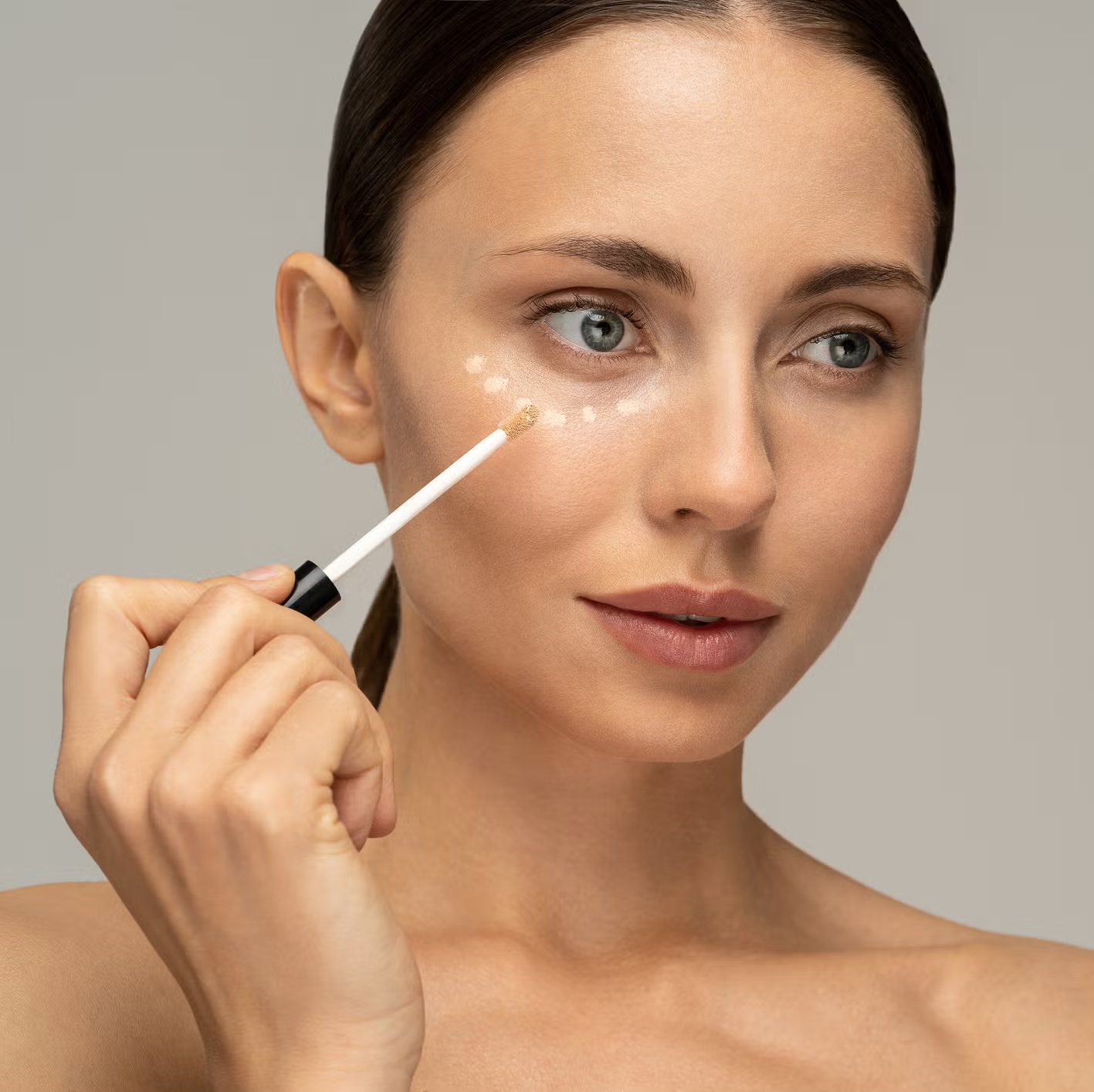
Midday makeup breakdown and unwanted surface shine present a frequent, frustrating challenge for oily and combination skin types. While patients often attempt to manage excessive shine by frequently applying face powders or blotting papers, these surface remedies fail to address the root biological cause: 5-alpha-Reductase Driven Sebum Hyper-secretion and Interfacial Lipid-Emulsion Breakdown.
When sebaceous glands continuously secrete free fatty acids, triglycerides, and squalene onto the epidermal surface, these lipids mix with sweat to form an unstable surface emulsion. This liquid film breaks down makeup polymers, refracts ambient light unevenly, and produces an oily, greasy sheen within hours of application.
To achieve long-lasting mattification and regulate sebum production at its source, advanced cosmetic formulators such as Prollenuim Medical Technologies and Ninaveli utilize a complementary dual-action pair: Silica Silylate and Zinc Glycinate.
Dual-Action Control Strategy
1. Immediate Physical Mattification (Silica Silylate)
- High Hydrophobic Surface Area: Hydrophobically modified silica particles feature a porous, 3D network that repels water while rapidly absorbing excess surface lipids.
- Lipid Absorption Capacity: Capable of binding multiple times its weight in oil, preventing sebum from pooling or breaking down topical cosmetics.
- Light Diffusing Micro-Structure: Scatters incoming light rays to convert specular glare (shine) into a soft-focus, matte finish.
2. Endocrine & Enzymatic Sebum Regulation (Zinc Glycinate)
Sebum Production vs. Surface Absorption Dynamics
Active Ingredients Delivered
- Zinc Glycinate Target:
- 5-alpha-Reductase Enzymatic Inhibition
- Suppresses Intracellular DHT Synthesis
- Lowers Sebocyte Lipid Secretion Rate
- Silica Silylate Target:
- Lipophilic Surface Adsorption
- Absorbs Free Fatty Acids & Squalene
- Prevents Midday Makeup Breakdown & Shine
Clinical Evidence
1. Physical Sebum Absorption and Polymer Stability
In an experimental study published in the Journal of Oleo Science (J-STAGE), titled “Oil Thickening and Sebum Binding via Hydrophobic Silica Silylate Networks,” researchers evaluated the oil-binding capacity of modified silicas.
The empirical data confirmed that hydrophobic silica silylate forms a porous, three-dimensional network that absorbs lipid molecules efficiently without caking. The authors noted that this hydrophobic modification prevents sweat from dissolving the film, ensuring long-lasting oil control.
2. Enzymatic Regulation of Sebaceous Glands via Zinc Complexes
In a biochemical trial published in the Journal of Investigative Dermatology (PubMed), titled “Inhibition of 5-Alpha-Reductase Activity by Zinc Complexes,” investigators analyzed how zinc ions regulate sebocyte activity.
The findings demonstrated that bio-available zinc suppresses 5-alpha-reductase Type 1 activity in human sebocytes, reducing intracellular dihydrotestosterone (DHT) levels and slowing down lipid droplet synthesis.
3. Clinical Anti-Shine and Sebum Reduction Kinetics
In a controlled clinical study published in the International Journal of Cosmetic Science (PubMed), titled “In Vivo Sebum-Regulating and Mattifying Efficacy of Topical Zinc and Silica Derivatives,” researchers tracked sebum excretion rates (SER) and surface shine over 12 hours.
The objective data showed a 42% reduction in surface gloss within 30 minutes of application, along with a statistically significant decrease in daily sebum output.
Practice Summary
Midday makeup breakdown and excess shine result from a combination of active 5-alpha-reductase signaling and sebum accumulation on the skin surface. Pairing Silica Silylate with Zinc Glycinate addresses both sides of this process. Zinc Glycinate inhibits 5-alpha-reductase to lower intracellular lipid production at the sebocyte level, while Silica Silylate’s hydrophobic matrix absorbs excess surface oil and diffuses ambient light. This dual-action mechanism prevents makeup breakdown, reduces surface glare, and maintains a clean, matte finish throughout the day.
Study References
- Study 1 (Physical Sebum Absorption & Silica Silylate): Oil thickening and sebum binding via hydrophobic silica silylate networks.URL: https://www.jstage.jst.go.jp/article/jos/70/5/70_ess20309/_article/-char/en
- Study 2 (5-Alpha-Reductase Inhibition by Zinc): Inhibition of 5-alpha-reductase activity in human skin by zinc and azelaic acid.URL: https://pubmed.ncbi.nlm.nih.gov/3207614/
- Study 3 (In Vivo Sebum-Regulating and Mattifying Efficacy): In vivo sebum-regulating and mattifying efficacy of topical zinc and silica derivatives in human subjects.URL: https://pubmed.ncbi.nlm.nih.gov/21831046/
Frequently Asked Questions
Disclaimer: The content provided in the Ninaveli Knowledge Hub is for informational and educational purposes only. This content is not intended to be a substitute for professional medical advice, diagnosis, or treatment and should not be used as such. Always seek the advice of a qualified healthcare provider or dermatologist with any questions you may have regarding a medical condition or before starting any new skincare regimen. Ninaveli does not guarantee the accuracy, completeness, or timeliness of the information provided and assumes no liability for any actions taken based on this content.
